 ERPLI
Small friends
+5 / -5 combinations played until they become automatic.
14+ games and 30+ learning modules matched to each student's level, so practising small friends, big friends and Vedic maths feels like play.
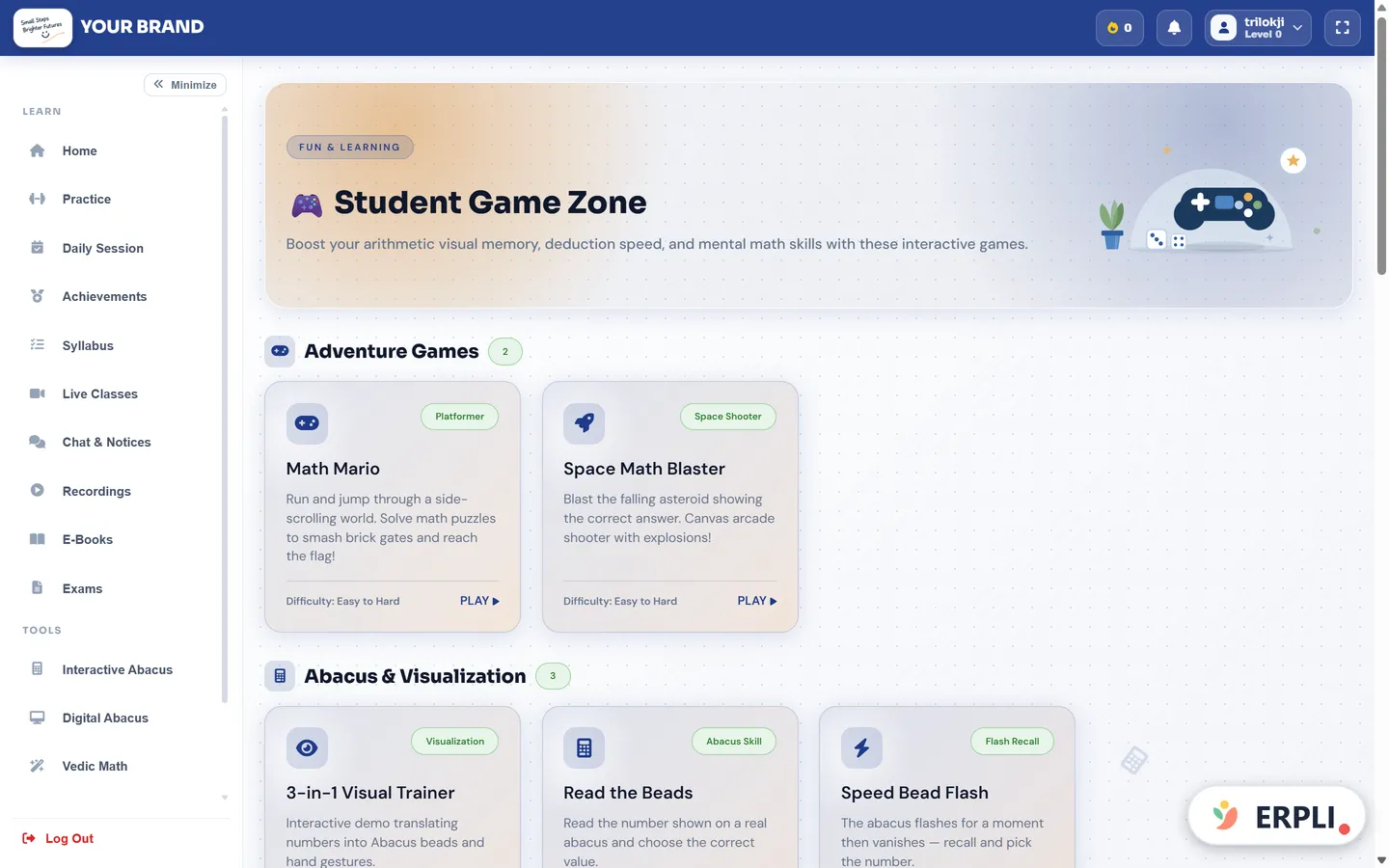
ERPLI Games are abacus and Vedic maths games inside the student app. Each student automatically sees games for their level, which the teacher sets in the syllabus and daily session. The library is refreshed every 45 days with new games, so practice stays fresh.
Students play many different games on the platform. Each one is designed to make mathematics itself fun, from reading beads to racing against the clock.
Read, remember and picture the beads.
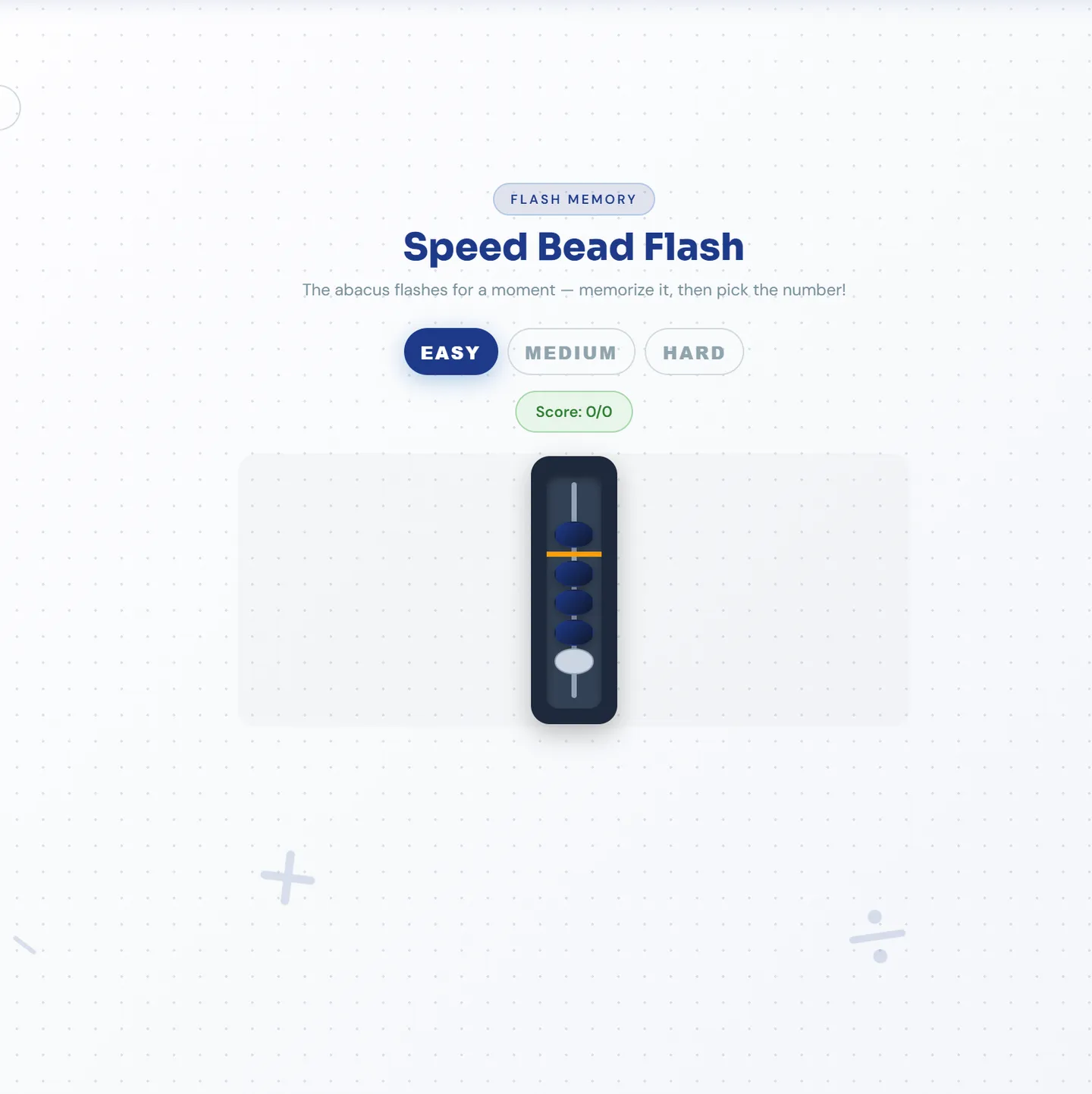
Memorise the beads and pick the number.
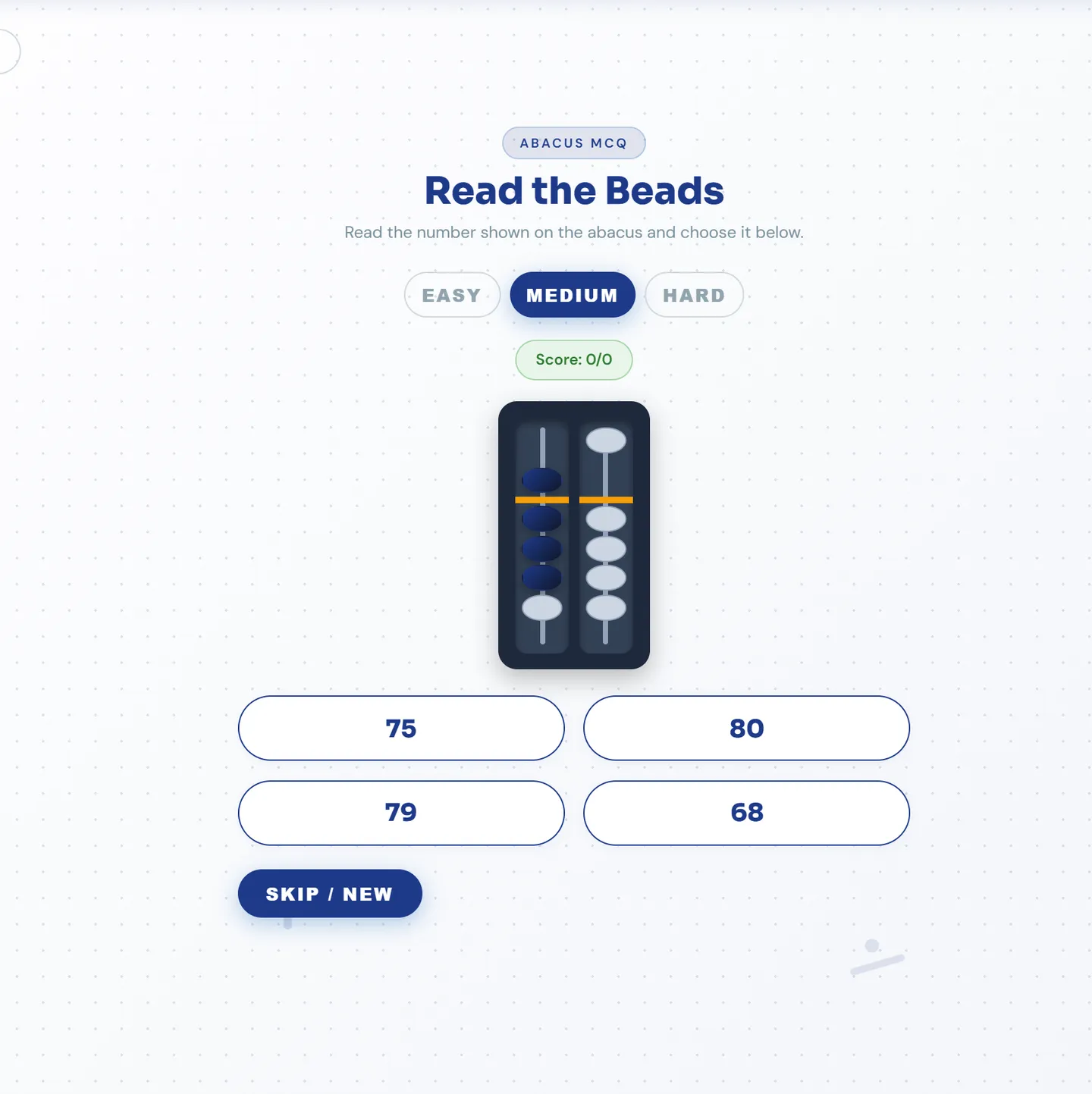
Read the abacus and choose the value.
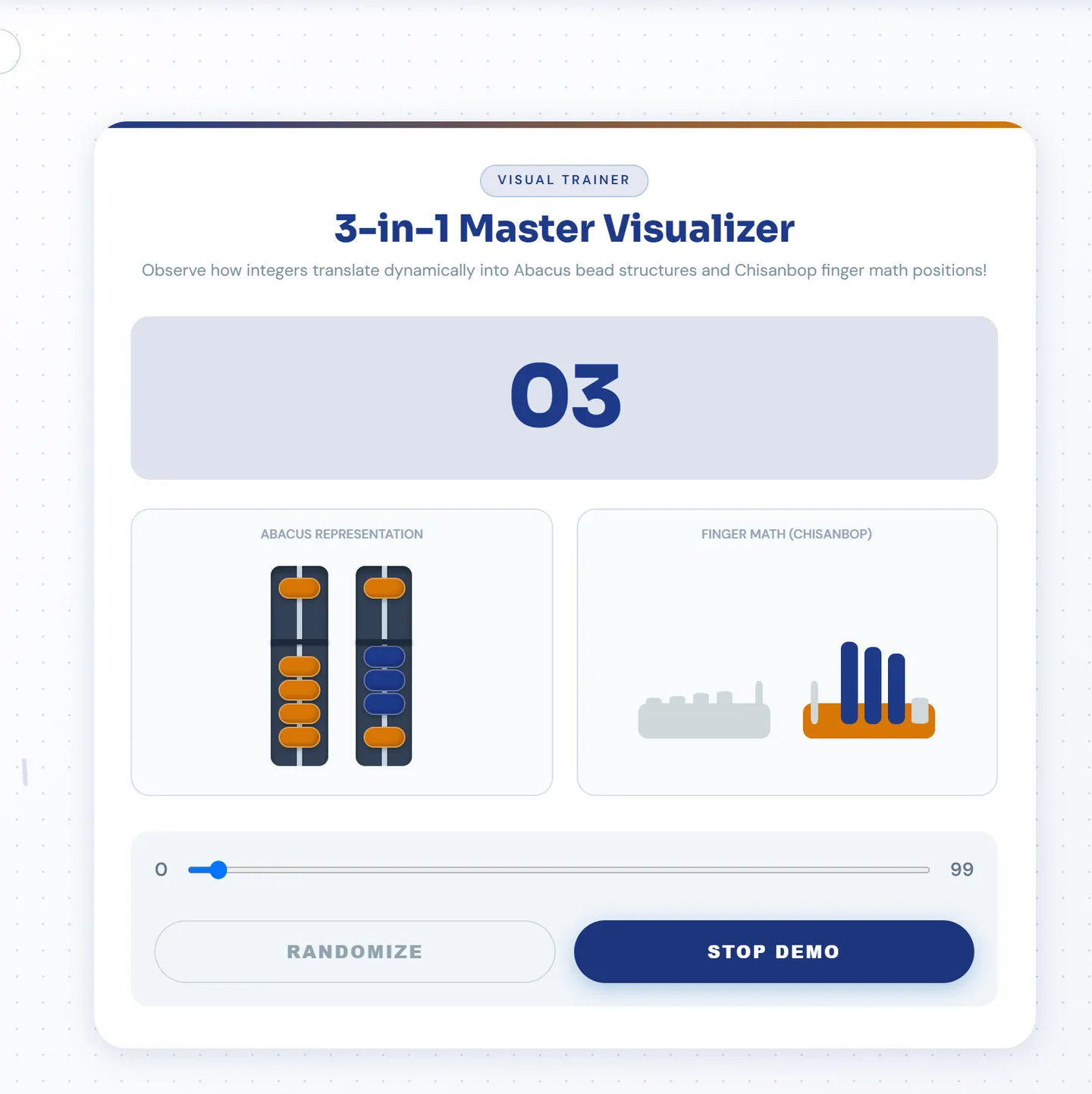
Numbers, abacus and finger maths together.
Fast, playful games where the right sum wins.
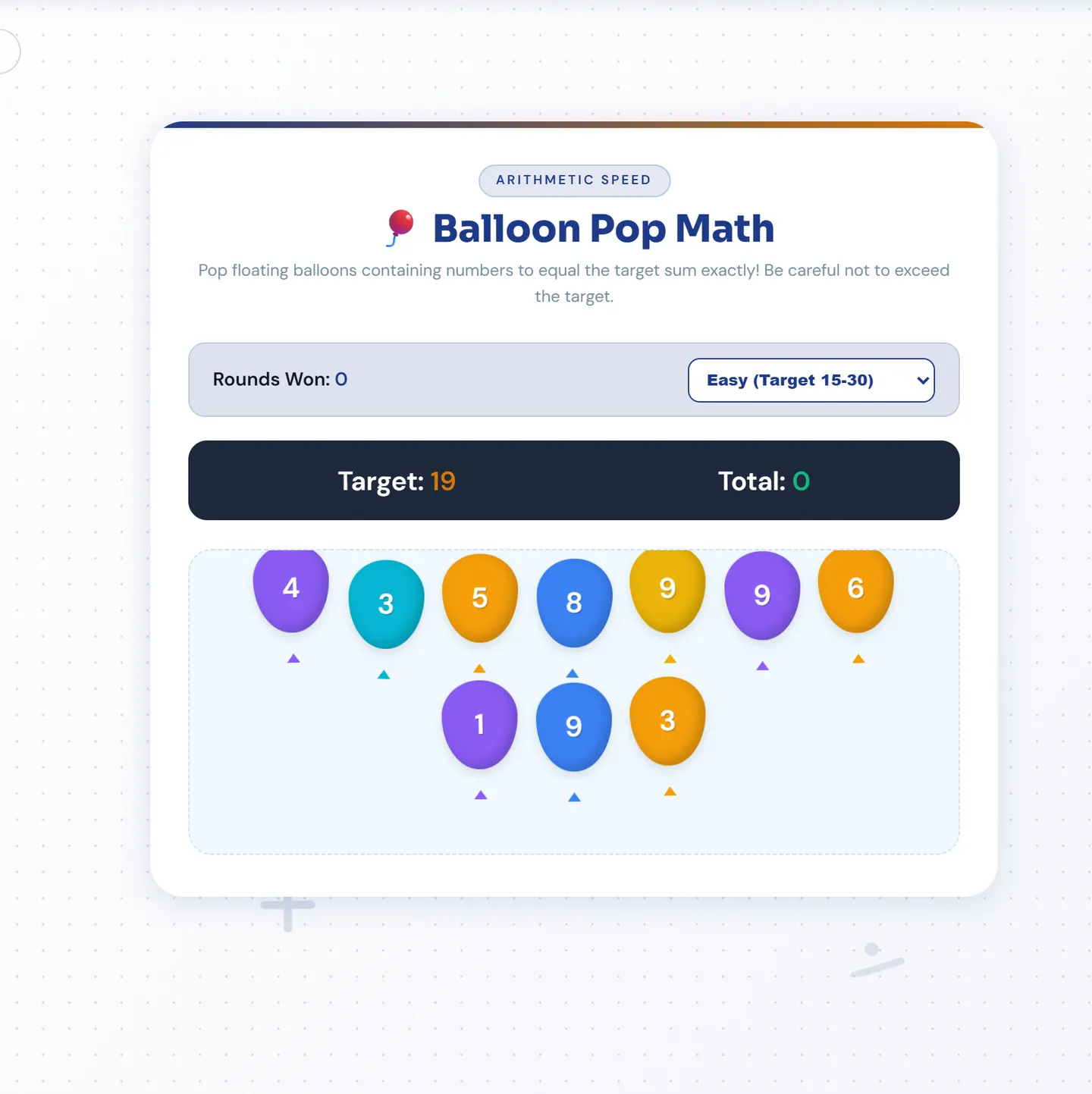
Pop balloons to hit the target sum.
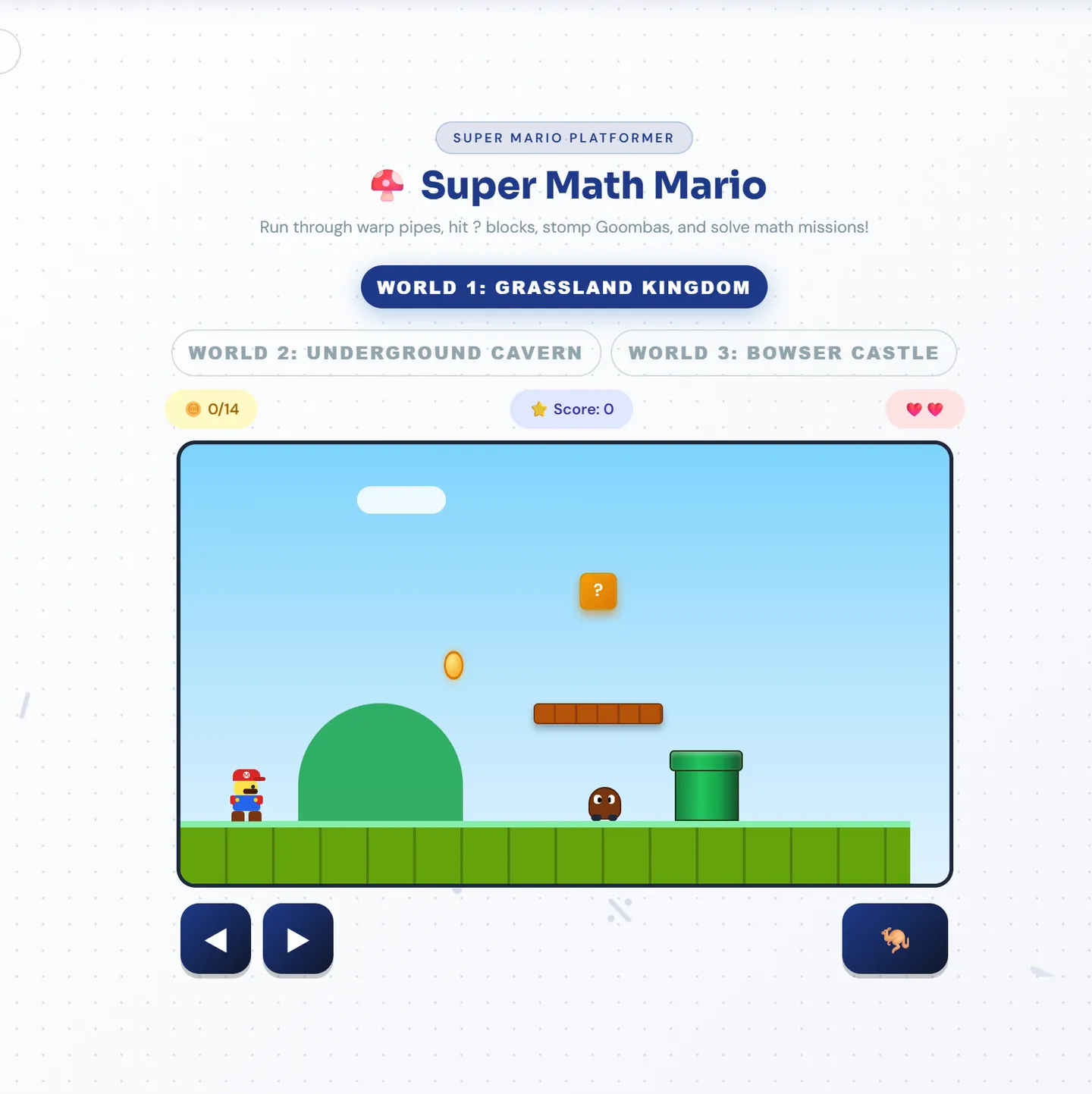
A platformer powered by maths.
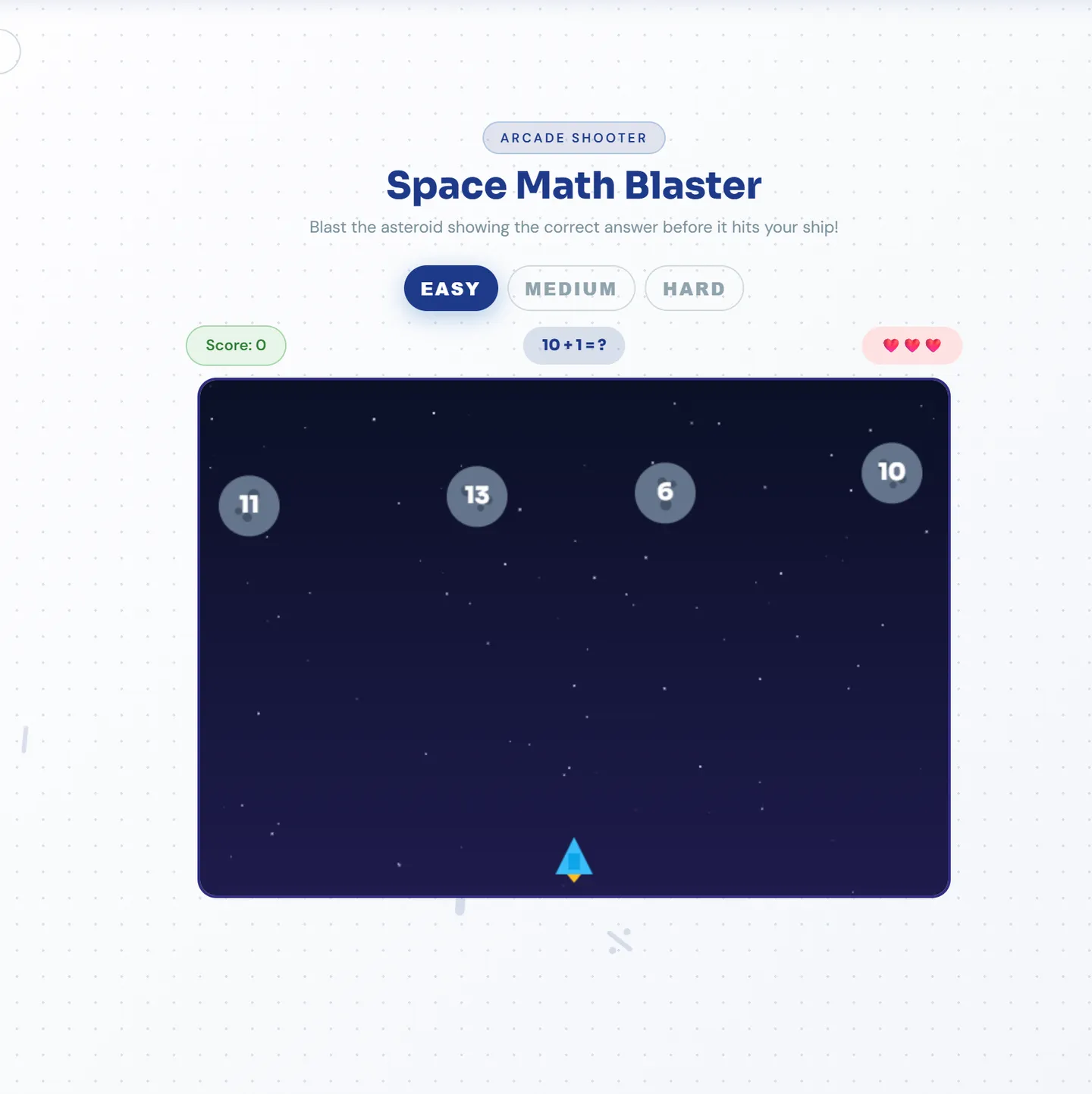
Shoot the right answer.
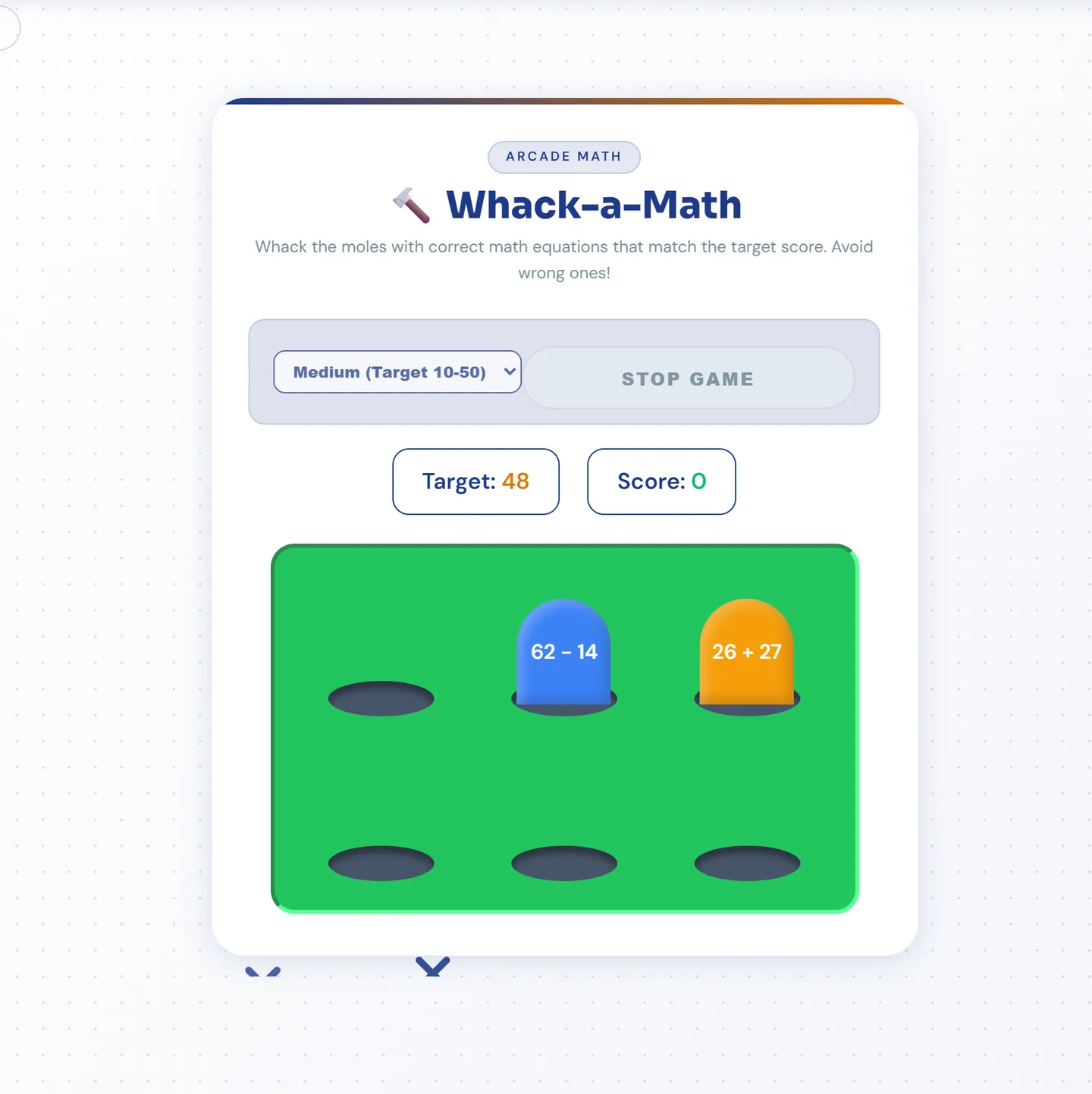
Hit the moles that match the target.
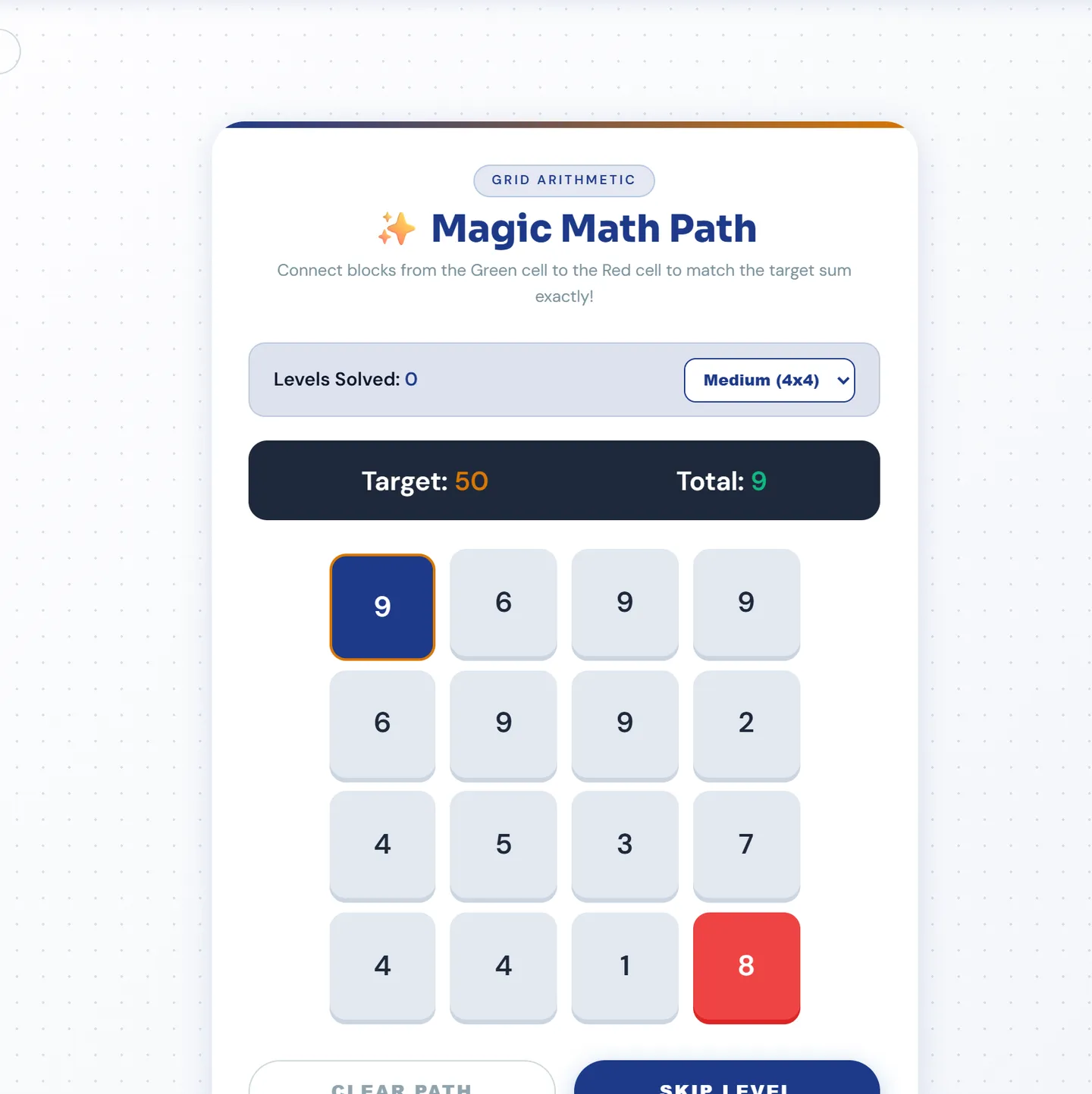
Connect blocks to reach the target.
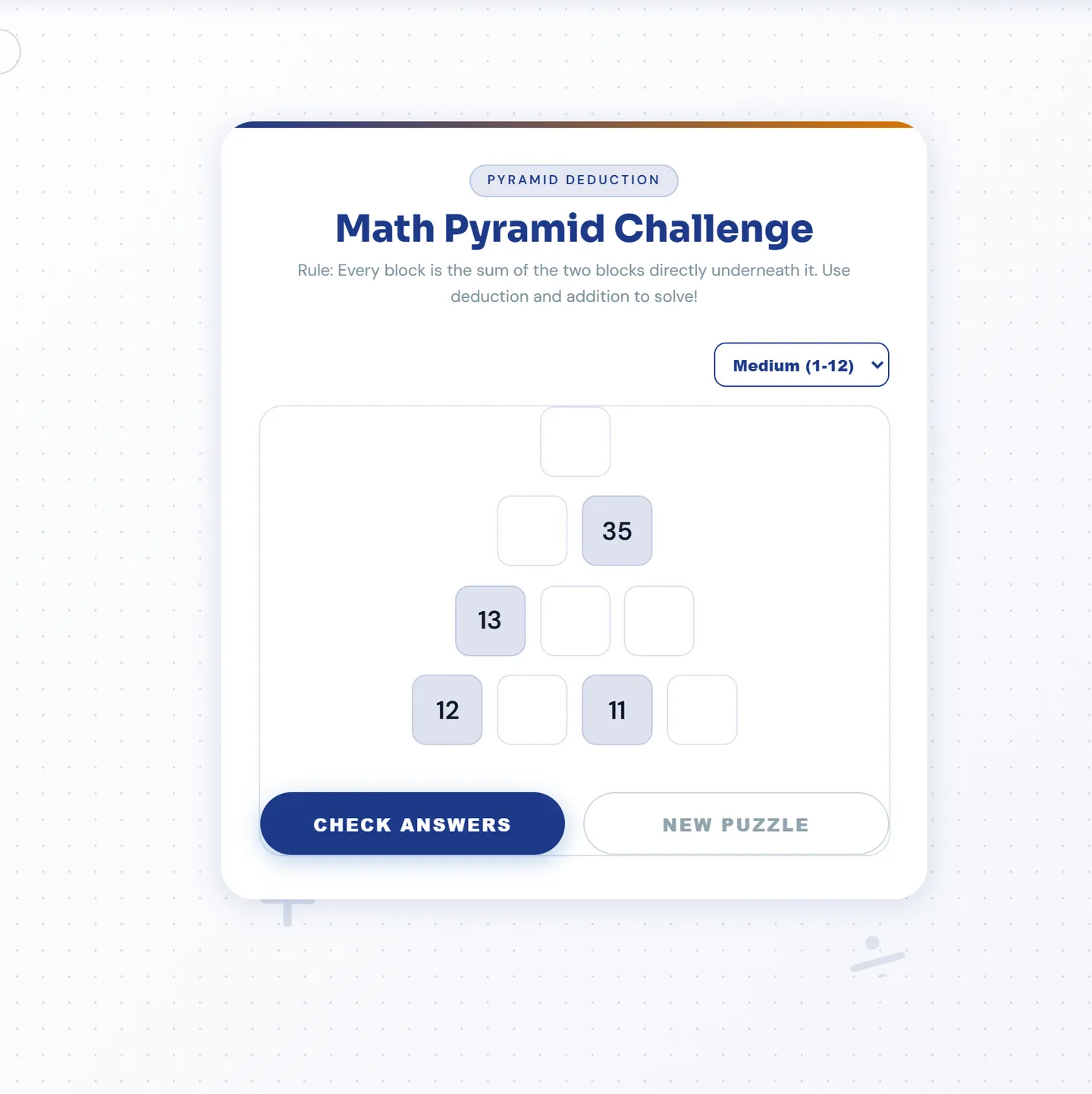
Fill in the missing blocks.
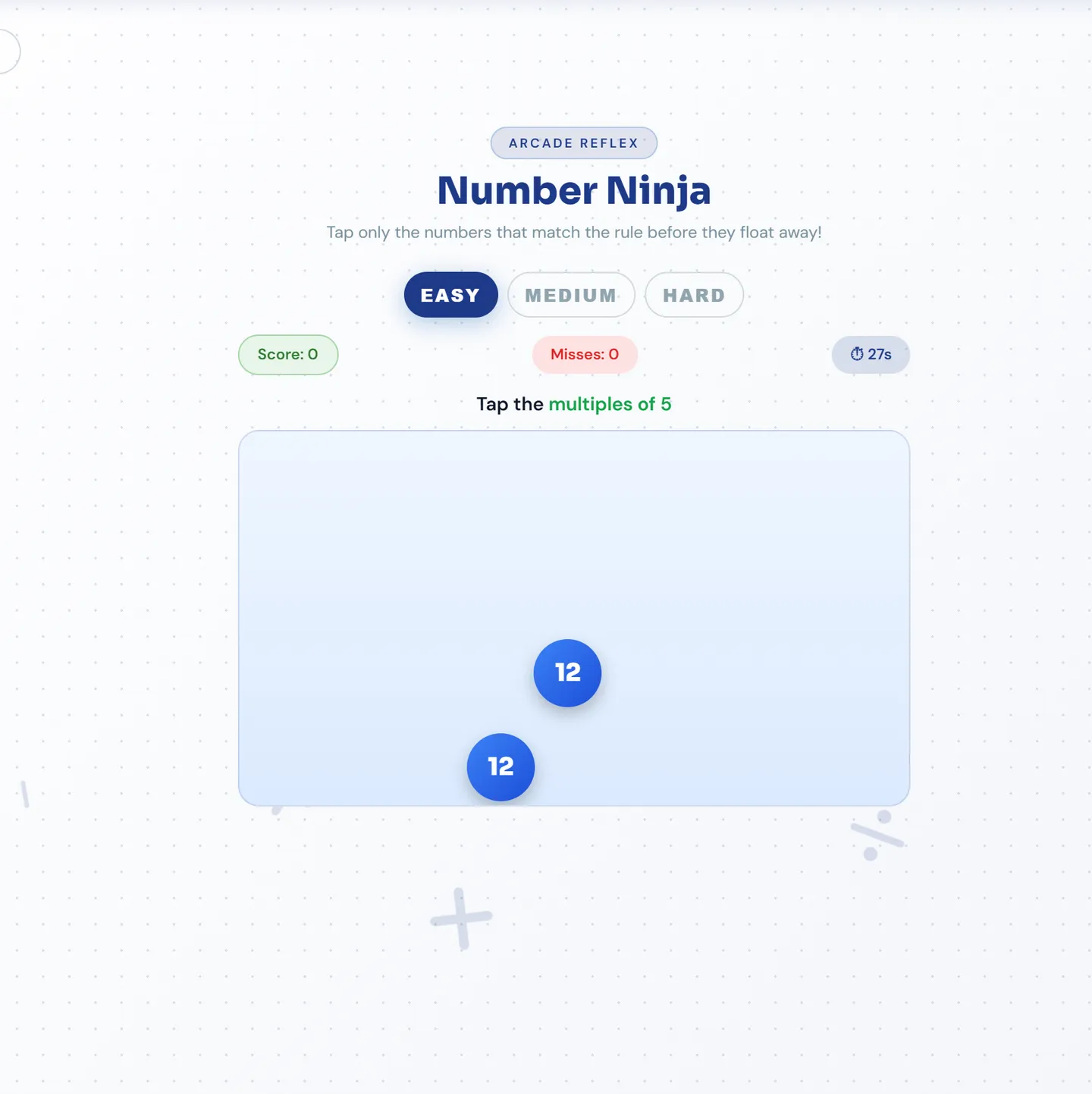
Tap the multiples before they fall.
Bonds, memory, money and time for younger learners.
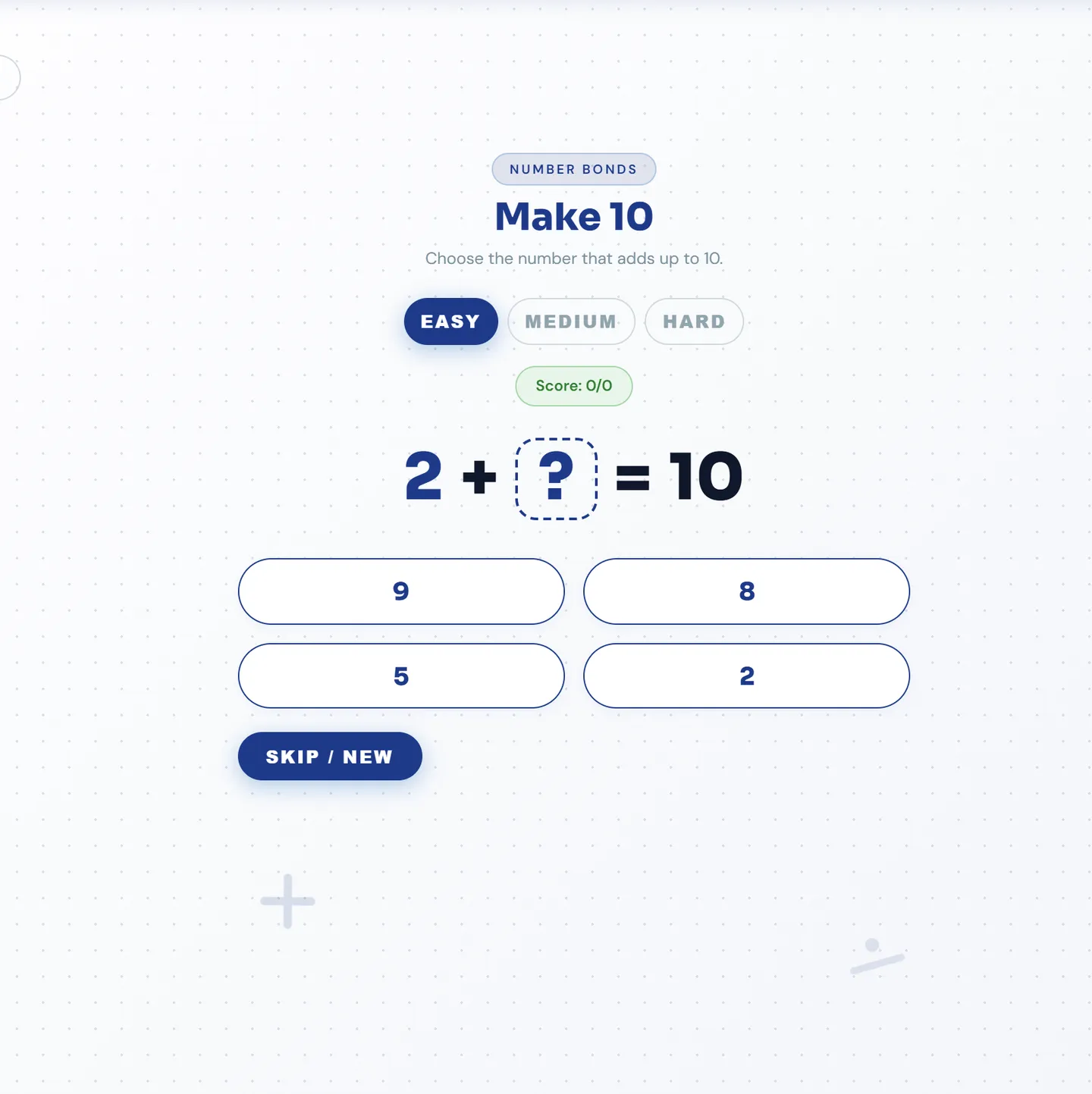
Number bonds practice.
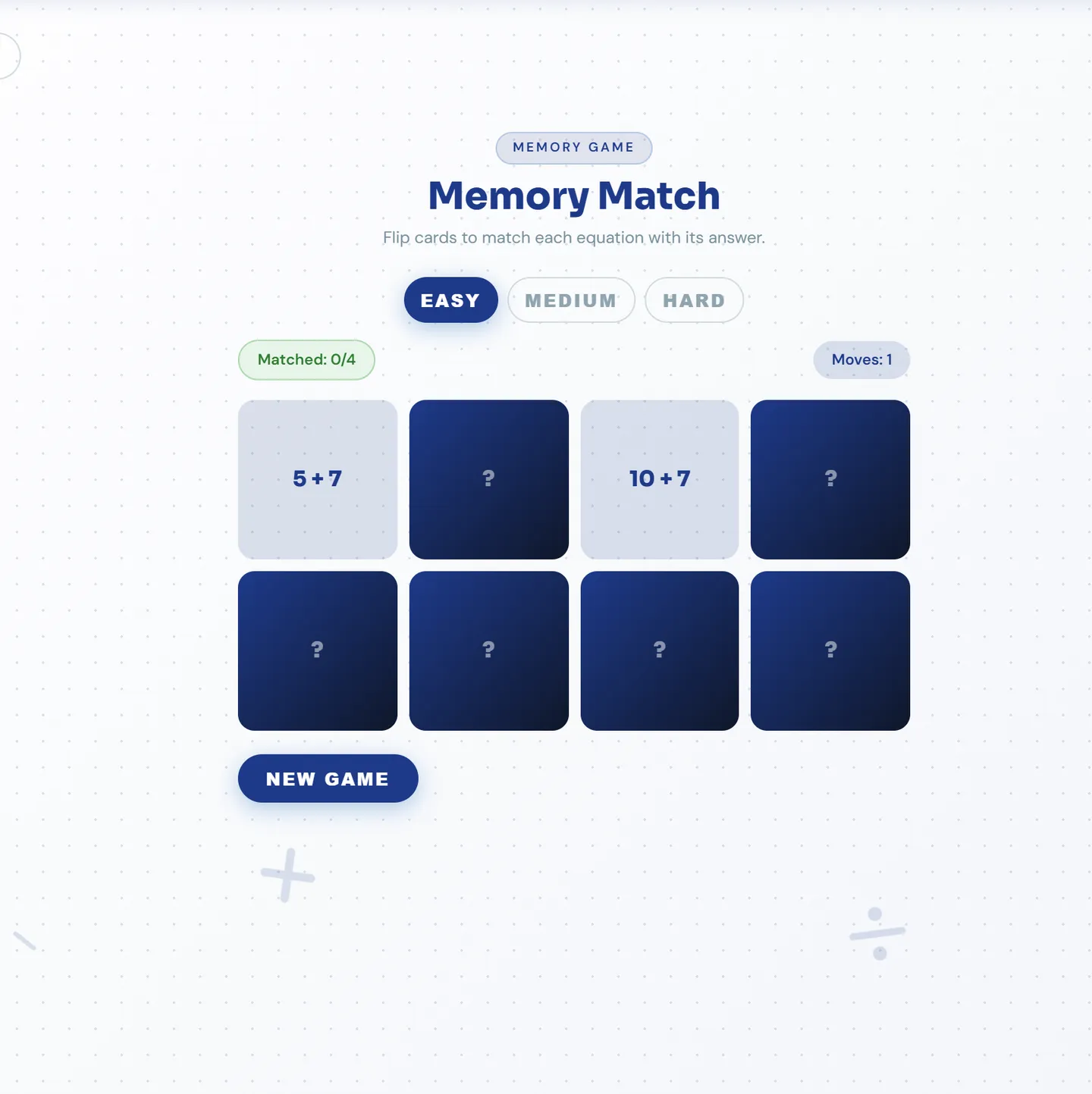
Flip cards to pair sums.
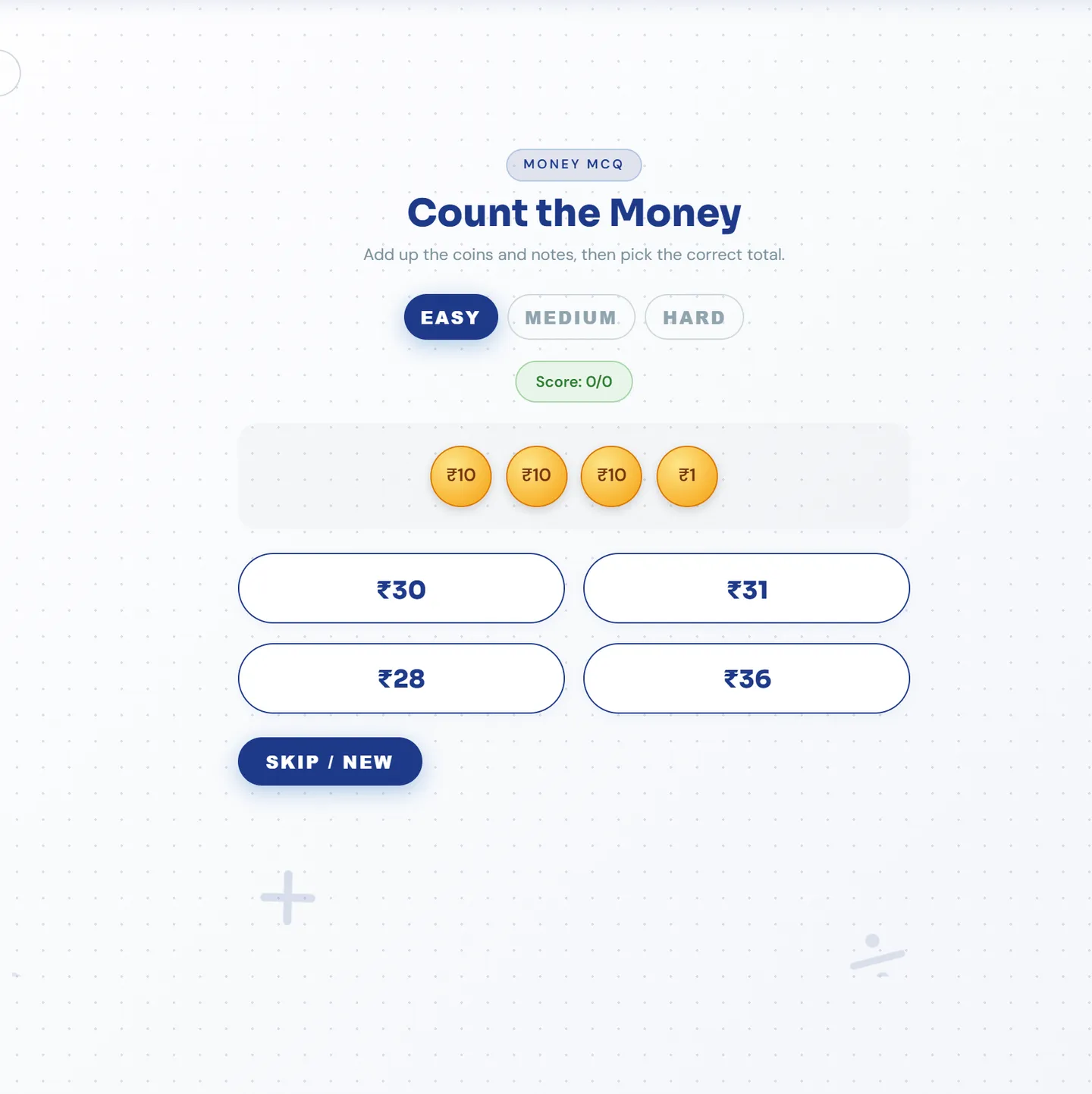
Add coins and notes.
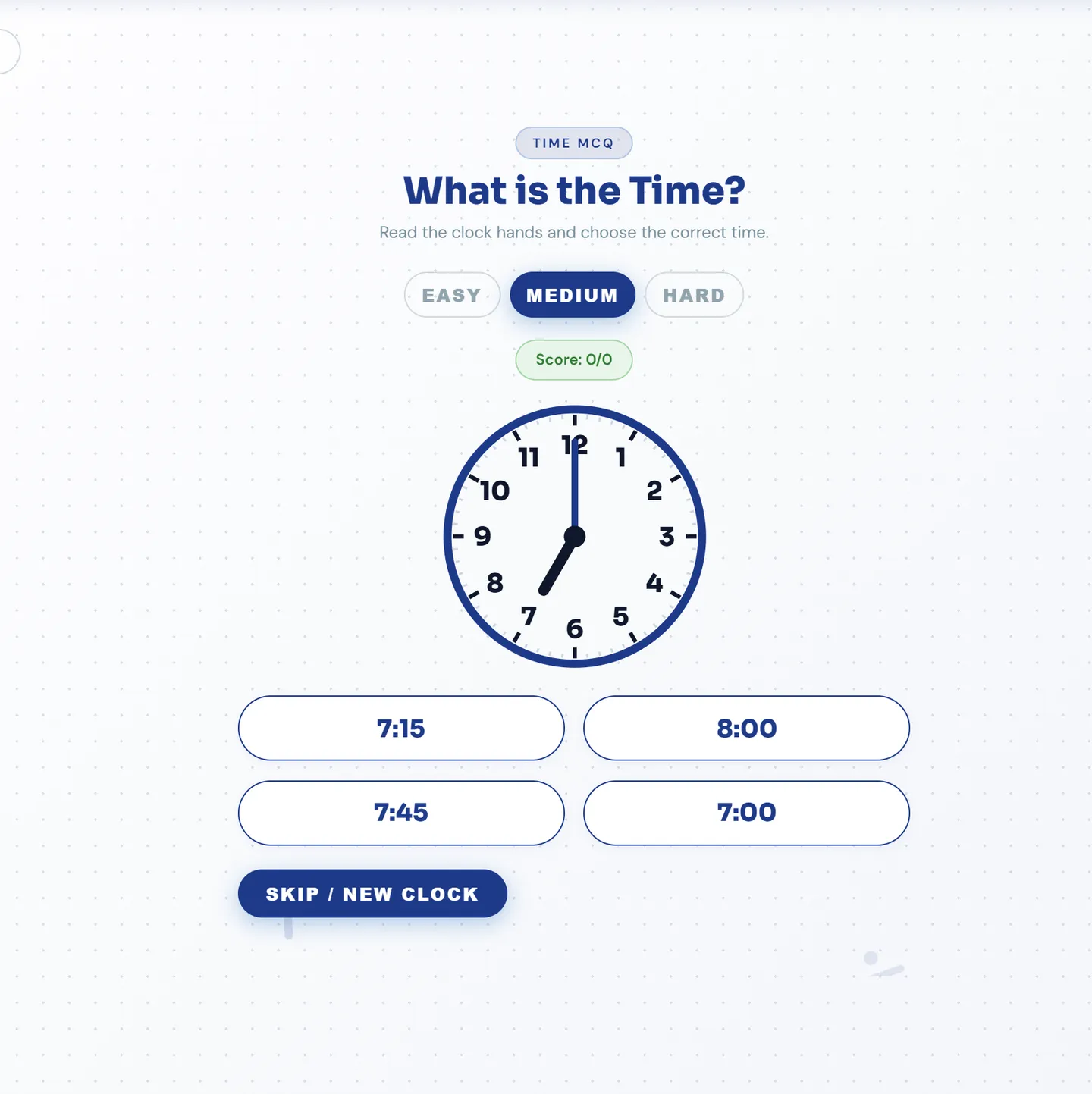
Read the clock.
Games cover the same skills you teach in class: small friends, big friends and combinations, plus Vedic maths. Students can also use visualisation to read and picture the beads.
+5 / -5 combinations played until they become automatic.
+10 / -10 carry and borrow practice inside the games.
Mixed small and big friend sums for advanced levels.
Fast mental calculation tricks played as games.
Read and picture the beads without touching an abacus.
Each game sets a mathematical challenge that keeps students thinking while they play.
Games are shown according to the level the teacher has set in the syllabus and the daily session. It happens automatically, so a beginner never lands in an advanced game and an advanced student is not bored by easy ones.
We add new games and remove old ones in 45-day windows, so students don't get bored playing the same game.
Every 45 days we review the library. We check which games have low student engagement, remove them, and add new games, so the library keeps improving.
We watch which games students actually play. Games that students ignore are retired, and games that hold attention stay.
New games appear in the student portal during your subscription, with no setup. Teachers don't need to pick games one by one, because games follow the level set for each student.
Almost every game follows student levels, so each student sees games that suit them.
A few games include Vedic maths. Dedicated Vedic maths practice covers the rest.
Play on a phone, tablet or computer, with no app to install.
No. Each game is built around abacus or mental maths ideas, such as reading beads, making 10 or reaching a target sum. Games add variety next to daily practice and the free virtual abacus, rather than replacing them.
Games that drill +5 and -5 moves until they are automatic.
Games that practise +10 and -10 carry and borrow steps.
Games that mix both formulas at higher levels.
ERPLI is built for abacus and Vedic maths institutes in India, and the games are made for abacus students rather than generic maths apps.
A few teachers have told us the games are amazing, and that students use them a lot. We share this feedback as reported to our team, without individual names.
Some teachers ask whether games are really good for their academy. Our answer is that games improve student retention, because practice stays fun.
Figures reported by ERPLI, October 2026. Page last updated 15 October 2026.
They are educational. Every game is tied to abacus logic, so while it feels like an arcade game, students use visual calculation, small friends and big friends as they play.
Games are shown according to the student's level, which the teacher sets in the syllabus and daily session. It happens automatically, so no one assigns games one by one.
We update the library in 45-day windows, adding new games and removing others, so students don't get bored of the old ones.
No. While you are subscribed to ERPLI, new games appear automatically in your students' portal.
Yes. The teacher dashboard provides analytics on practice, so you can see who is practising most and where students are struggling.
No. ERPLI games have no scores or rewards. The fun comes from the game itself and the maths challenge inside it.
Every device. Students can play on a phone, tablet or computer through the student portal.
Yes, but only a few of them. Most games focus on abacus, small friends, big friends and combinations. For more Vedic maths, students use the Vedic maths practice in ERPLI.
Almost every game uses levels, so students see games that suit the level their teacher has set.
We look at which games have low engagement and remove those at the next 45-day update, then add new games in their place.
Teachers who asked us this heard the same answer: games make practice enjoyable, and that improves student retention.
Games are one part of the ERPLI Abacus platform. These features connect to them directly.
Set the level and formulas that decide which games a student sees.
Build your syllabusGames appear as stops inside each level's daily practice journey.
See daily practiceStudents practise on a virtual abacus before and after the games.
Try the free virtual abacusFast mental calculation practice next to abacus work.
Explore Vedic mathsTrack how students are performing across daily practice and exams.
Explore analyticsCelebrate milestones with branded digital certificates.
View certificatesERPLI Abacus is abacus academy software from ERPLI. It puts live classes, daily practice, games, online exams, certificates, attendance, fees and franchise management in one platform, under your academy's own brand. Abacus Games is built into ERPLI Abacus and shares data with every other feature, so students, parents, teachers and owners all use the same login.
Built forschoolscoaching institutesprivate tutorsSee all ERPLI Abacus featuresERPLI Abacus pricingVedic Maths tricks