ERPLI

To get students for online tuition in India, use a mix of WhatsApp groups, local Facebook groups, Google Business Profile, and demo classes to attract parents. ERPLI lets you launch your own branded abacus app without a franchise fee, making it easy to manage students online.
Start by creating a simple demo funnel: invite parents for a free trial class, collect their details, and follow up. Use the following steps to get started:
- Decide your subject, level, and target age group.
- Set up your basic tuition app or platform (like ERPLI for abacus).
- Join and post in local WhatsApp and Facebook groups.
- Create a Google Business Profile for your tuition.
- Offer free demo classes and collect leads.
- Follow up with parents and explain your unique benefits.
- Use student testimonials and progress reports to build trust.
- Keep records and handle fees online for convenience.
Key takeaways
- Use WhatsApp and Facebook groups to reach local parents quickly.
- Offer free demo classes as your main lead magnet.
- Set up a Google Business Profile so parents can find you online.
- Manage students, classes, and payments with an online app like ERPLI.
- Focus on clear pricing and regular communication with parents.
- See more tips in our guide to abacus student leads.
The best online channels to get students
- WhatsApp groups: Join local school parent groups, housing society groups, and tuition groups. Post about your classes, timings, and a free demo offer.
- Facebook groups: Find city or neighbourhood groups (e.g., "Parents of Pune"), education groups, and post your class flyer.
- Google Business Profile: Create a free listing at Google Business Profile so parents searching "online abacus tuition near me" can find you.
- Instagram and YouTube: Share short videos of your teaching or student activities. Use hashtags like #abacustuition or #onlinetuitionindia.
- Word of mouth: Ask friends, neighbours, and relatives to refer parents. Share your demo link on WhatsApp status and Facebook stories.
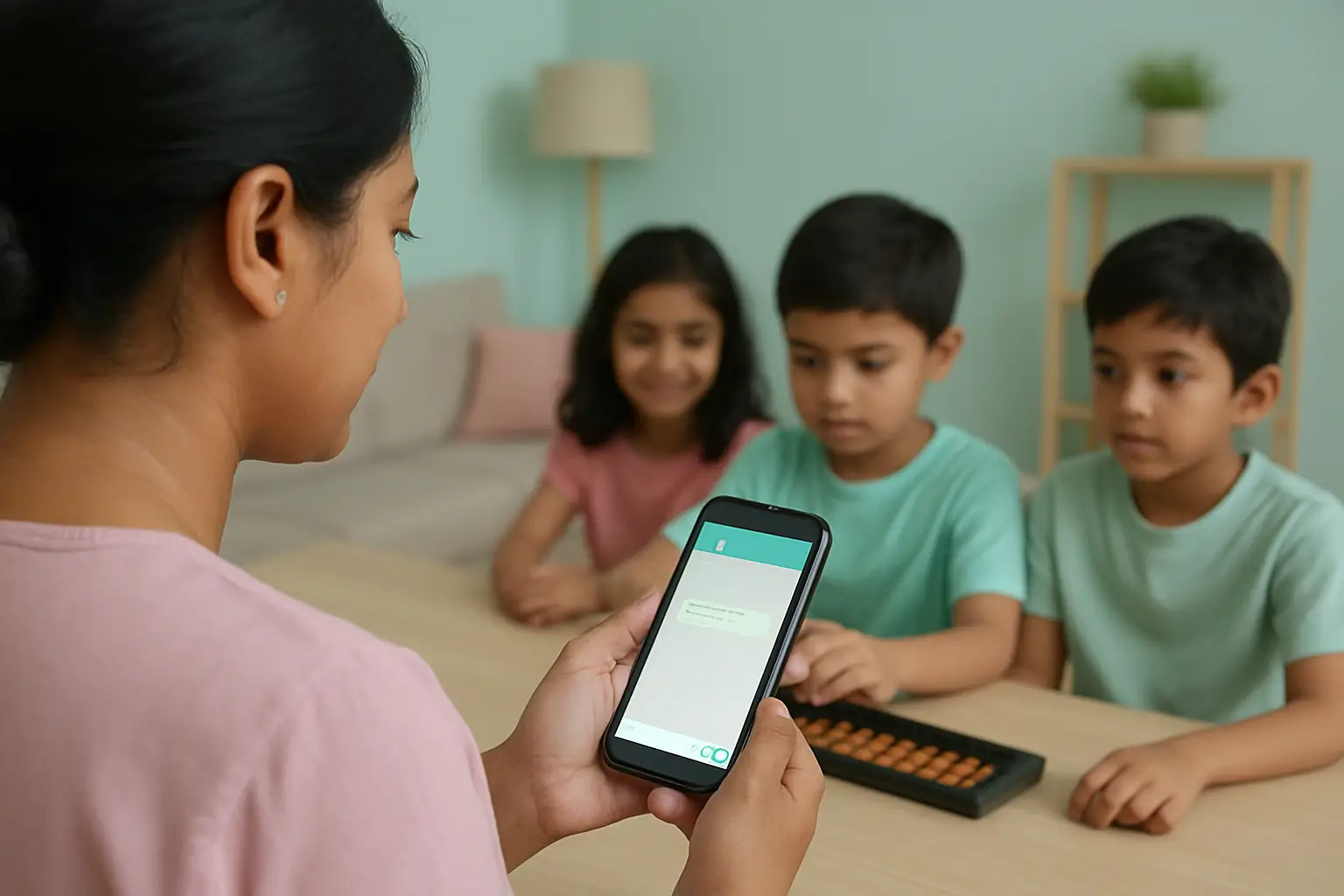
How to set up your demo funnel
A demo funnel means you give a free trial class, collect parent contact details, and follow up after the class.
- Step 1: Announce your demo class: Make a simple poster with date, time, and your WhatsApp number. Share in groups and with contacts.
- Step 2: Register leads: Ask interested parents to fill a Google Form or WhatsApp you directly.
- Step 3: Conduct the demo: Use Zoom, Google Meet, or your tuition app (ERPLI has inbuilt live class scheduling).
- Step 4: Collect feedback: After the demo, send a thank-you message and ask for feedback.
- Step 5: Follow up: Call or message parents, share your class schedule, fees, and how your classes are different.
- Step 6: Enroll and onboard: Once a parent agrees, add them to your student list and send payment details.
Pricing your online tuition: what works in India
- Most online abacus classes charge ₹400–₹1,000 per month per student, depending on city and teacher experience.
- Offer a discount for siblings or referrals (e.g., 10% off for each new student referred).
- Keep your pricing simple and display it clearly in your promotional messages.
- ERPLI charges ₹50 per student per month up to 30 students, with all features included—see ERPLI Abacus pricing.
- Payment collection: Use UPI, Google Pay, or the fee collection feature in your tuition app.
| Student Range | Typical Tuition Fee (per month) | ERPLI App Fee (per student) |
|---|---|---|
| 1–10 | ₹400–₹1,000 | ₹50 |
| 11–30 | ₹400–₹900 | ₹50 |
| 31–50 | ₹350–₹850 | ₹45 |
| 51–75 | ₹300–₹800 | ₹40 |
| 76–100 | ₹250–₹750 | ₹30 |
Pricing varies by city and subject. ERPLI fee is per student per month; see ERPLI Abacus pricing for details.
Managing students, classes and fees online
- Use a tuition app to keep track of students, batches, attendance, and payments. With ERPLI, you can manage all this in one place.
- Send reminders for class timings and fee payments.
- Share homework, worksheets, and progress reports through the app.
- Parents like getting regular updates and attendance reports.
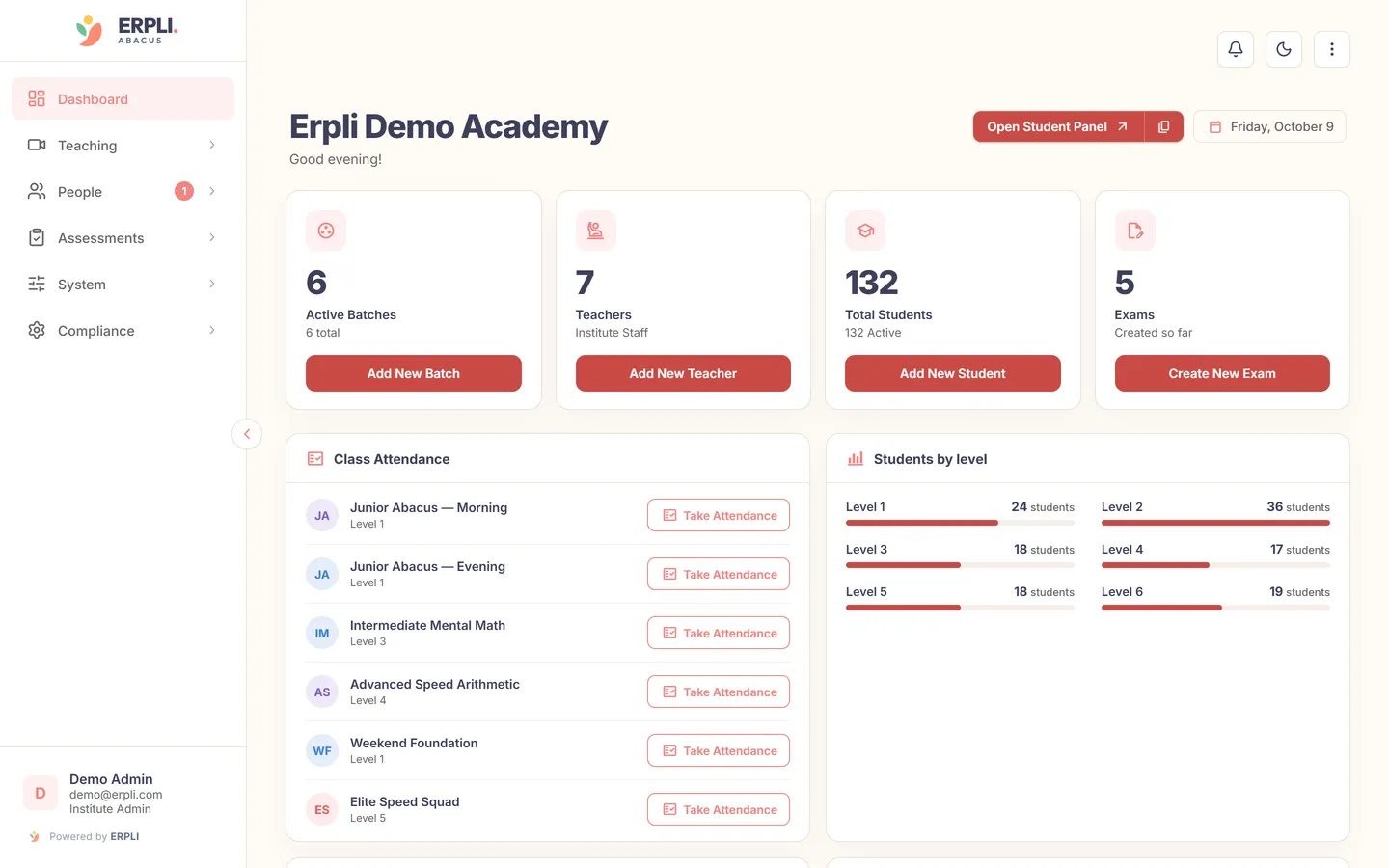
- Keep all parent contacts organized so you can share updates easily.
- Use certificates and badges to motivate students—ERPLI lets you design and send certificates online.
- For more tips, see abacus for home tutors.
Building trust with parents and students
- Share regular progress reports and sample worksheets.
- Show before/after results from your demo class (e.g., how quickly a student improved).
- Use real testimonials from parents and students (ask for permission to share).
- Display your own certifications or training in your app or posters.
- Offer a satisfaction guarantee for the first month to reduce parent hesitation.
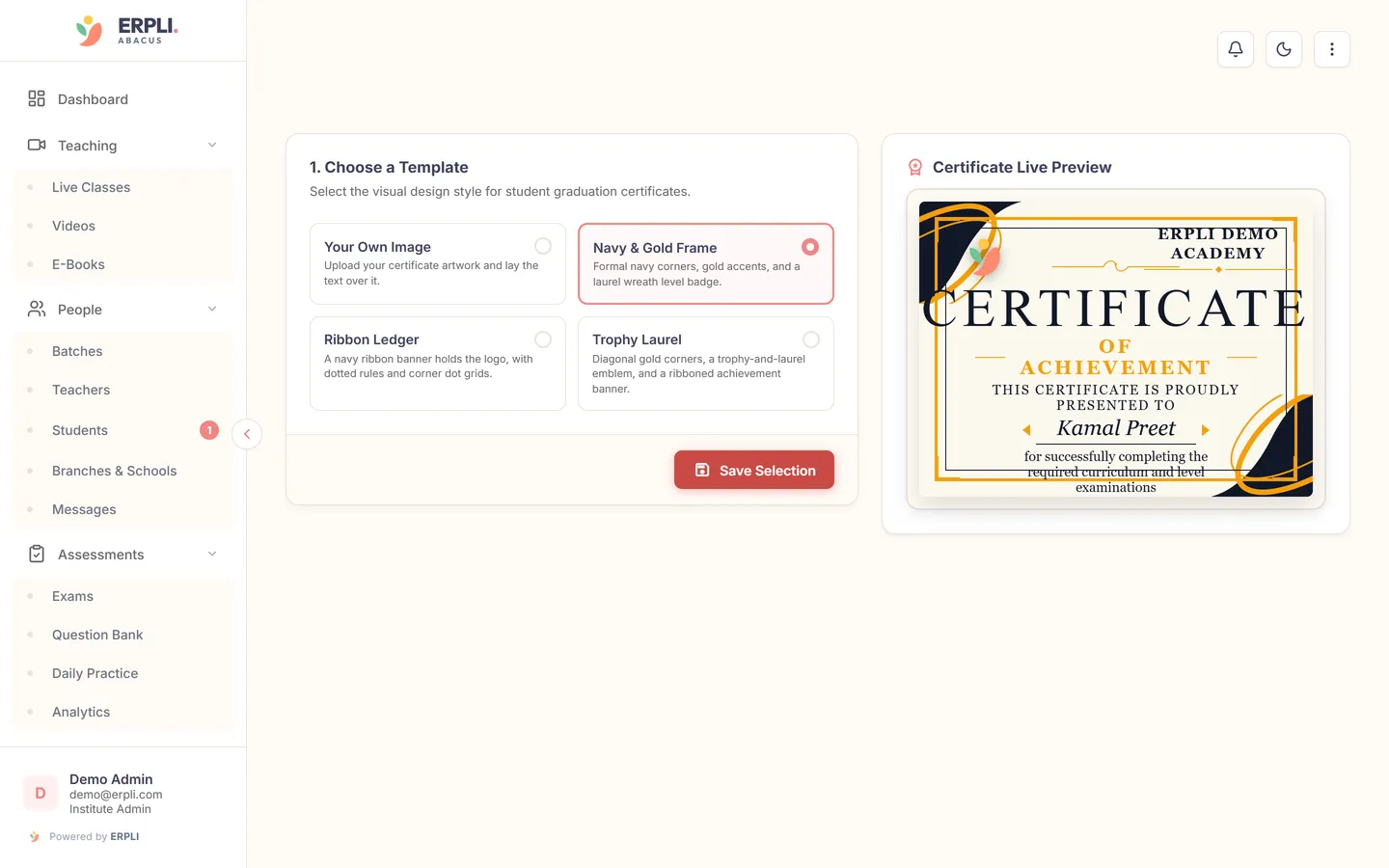
- Use digital certificates and badges to show student achievements. ERPLI makes it easy to issue and share these.
- For more ideas, read about branding your own abacus academy.
Legal and practical steps to start online tuition
- No license is required to start small online classes in India, but you can register your business at Udyam Registration for MSME benefits.
- Keep basic records: student list, fee receipts, attendance, and parent communication.
- Use GST only if your annual income is above ₹20 lakh; check GST portal for more details.
- Use a simple tuition app like ERPLI to manage records securely.
- See abacus academy setup for more on starting your academy.
Growing your online tuition business
- Ask current parents for referrals and offer incentives.
- Run small online contests or quizzes to engage students and attract new leads.
- Share student achievements and certificates on social media and WhatsApp.
- Join abacus student leads networks to reach more parents.
- Keep learning new teaching techniques—see abacus syllabus by level and abacus games for ideas.
Next step
Start with one channel, offer a free demo, and follow up with every parent. Consistency and clear communication are the keys to getting students for online tuition in India.