ERPLI

Choosing between an in-house abacus programme and an abacus franchise for schools depends on your goals, resources, and desired control. Both options have distinct advantages in terms of cost, branding, teacher training, and student certification. Here’s a clear, side-by-side comparison to help your school decide what fits best.
Key takeaways
- In-house abacus gives full control over curriculum, branding, and certificates.
- Abacus franchise for schools offers ready-made systems, external branding, and support.
- Cost per student is usually lower with in-house, but time investment is higher.
- Franchises simplify training and marketing, but add ongoing fees.
- Student certificates and recognition can be managed well in both models.
What is an abacus franchise for schools?
- An abacus franchise for schools means partnering with an established brand that provides curriculum, materials, training, and sometimes certification.
- The school pays a franchise fee (one-time and/or recurring per student or per year) for using the brand and system.
- The franchise controls syllabus, exams, and certificates—often using their own branding.
- Teacher training, support, and marketing materials are provided by the franchisor.
- Many franchises require schools to commit a minimum number of students or guarantee a fee.
- For more on how franchise models work, see Franchising.
What does in-house abacus in school without franchise involve?
- Setting up abacus in school without franchise means managing curriculum, teacher training, and exams internally or with a software partner like ERPLI.
- The school owns its abacus brand, certificates, and can adapt the syllabus to their needs.
- Costs are mostly software or material fees, with no franchise royalty or branding restrictions.
- Schools can use digital abacus tools, design custom certificates, and train teachers with online resources.
- For step-by-step help, see in-house abacus for schools.
Cost comparison: per student and overall
- Abacus franchise for schools typically charges:
- One-time setup fee: ₹10,000–₹50,000 (varies by city and brand)
- Per student royalty: ₹100–₹300/month
- Material kits: ₹300–₹600 per student
- In-house with ERPLI or similar:
- Software: ₹50 per student/month (up to 30 students, then lower)
- No franchise royalty, own branding included
- Materials: School can source locally, often ₹100–₹250 per student
- Table: Typical annual cost for 50 students
| Model | Setup Fee | Monthly Fee (50 students) | Annual Total | Branding |
|---|---|---|---|---|
| Franchise (avg) | ₹20,000 | ₹10,000–₹15,000 | ₹1.4–₹2 lakh | Franchisor |
| In-house (ERPLI) | ₹0–₹2,000 | ₹2,250 | ₹27,000 | School |
- Costs vary by city, brand, and student count. In-house is usually 60–80% cheaper per year.

Branding, certificates, and recognition
- Franchise:
- Uses franchisor’s name and logo on all materials and certificates.
- National brand can help with parent trust and marketing.
- Certificates issued by franchise, format is fixed.
- In-house:
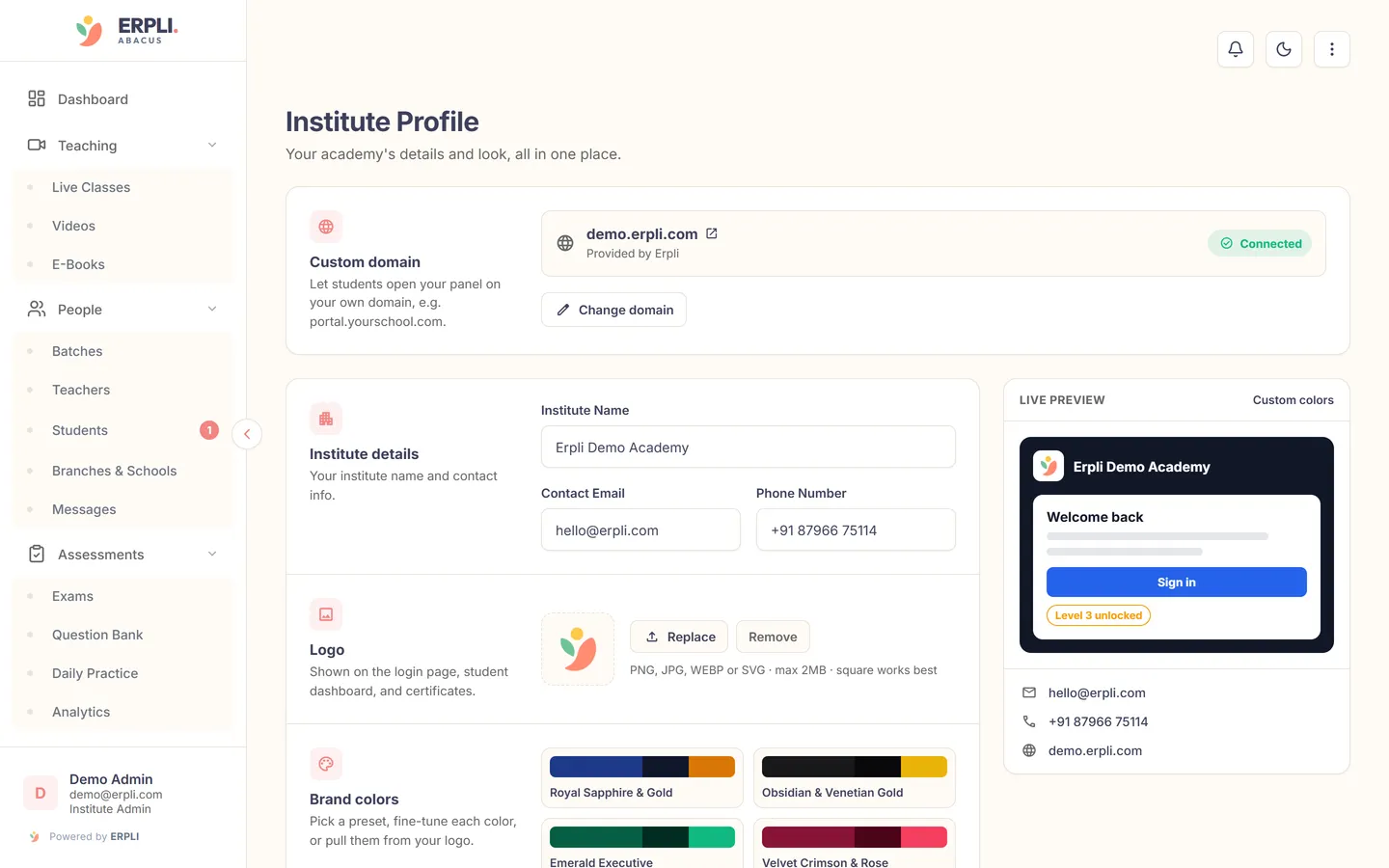
- School’s own name/logo on certificates, app, website, and materials.
- More flexibility to align with school’s values and branding.
- Tools like ERPLI abacus certificate design allow customisation.
- Both models are accepted by parents, but in-house boosts school’s unique identity.
Teacher training and support
- Franchise:
- Offers standardised teacher training (usually 1–2 days, sometimes online).
- Ongoing support and refresher courses may be included.
- Teacher must follow franchise methods and rules.
- In-house:
- School selects and trains teachers with its own pace and methods.
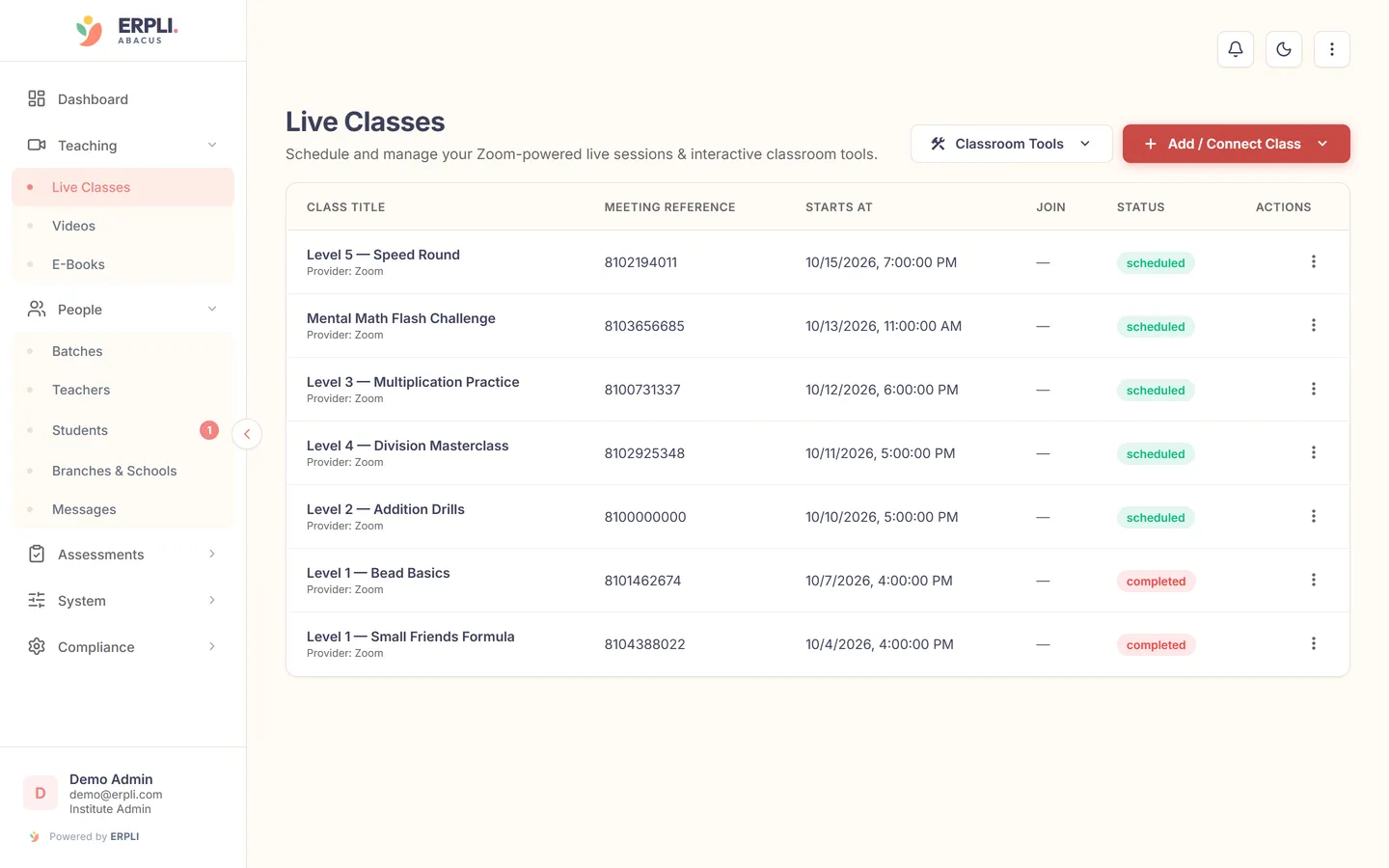
- ERPLI provides detailed training modules, live classes, and practice sets for teachers.
- More freedom to adapt methods to staff skills.
- Many schools find in-house training more flexible, especially with digital support.
Curriculum and syllabus control
- Franchise:
- Fixed syllabus, structured levels, and exams set by franchisor.
- Updates and changes are controlled centrally.
- Good for standardisation across branches.
- In-house:
- School can choose or design its own abacus syllabus (e.g., ERPLI abacus syllabus).
- Flexibility to match school calendar, add Vedic Maths, or integrate with other maths activities.
- Exams and certificates can be scheduled and designed as per school needs.
- In-house is ideal if you want to innovate or align abacus with your own academic goals.
Student outcomes and parent expectations
- Both models teach the same core skills: mental calculation, concentration, and speed.
- Franchise brands sometimes carry more recognition with parents, especially in larger cities.
- In-house abacus can be equally effective with the right tools and teacher training.
- ERPLI and similar platforms provide digital practice, interactive games, and progress analytics.
- Ultimately, student outcomes depend on teaching quality, not just the brand.
Administrative management and software
- Franchise:
- May provide basic admin tools for attendance, fees, and batch management.
- Reporting is often limited to franchise format.
- In-house:
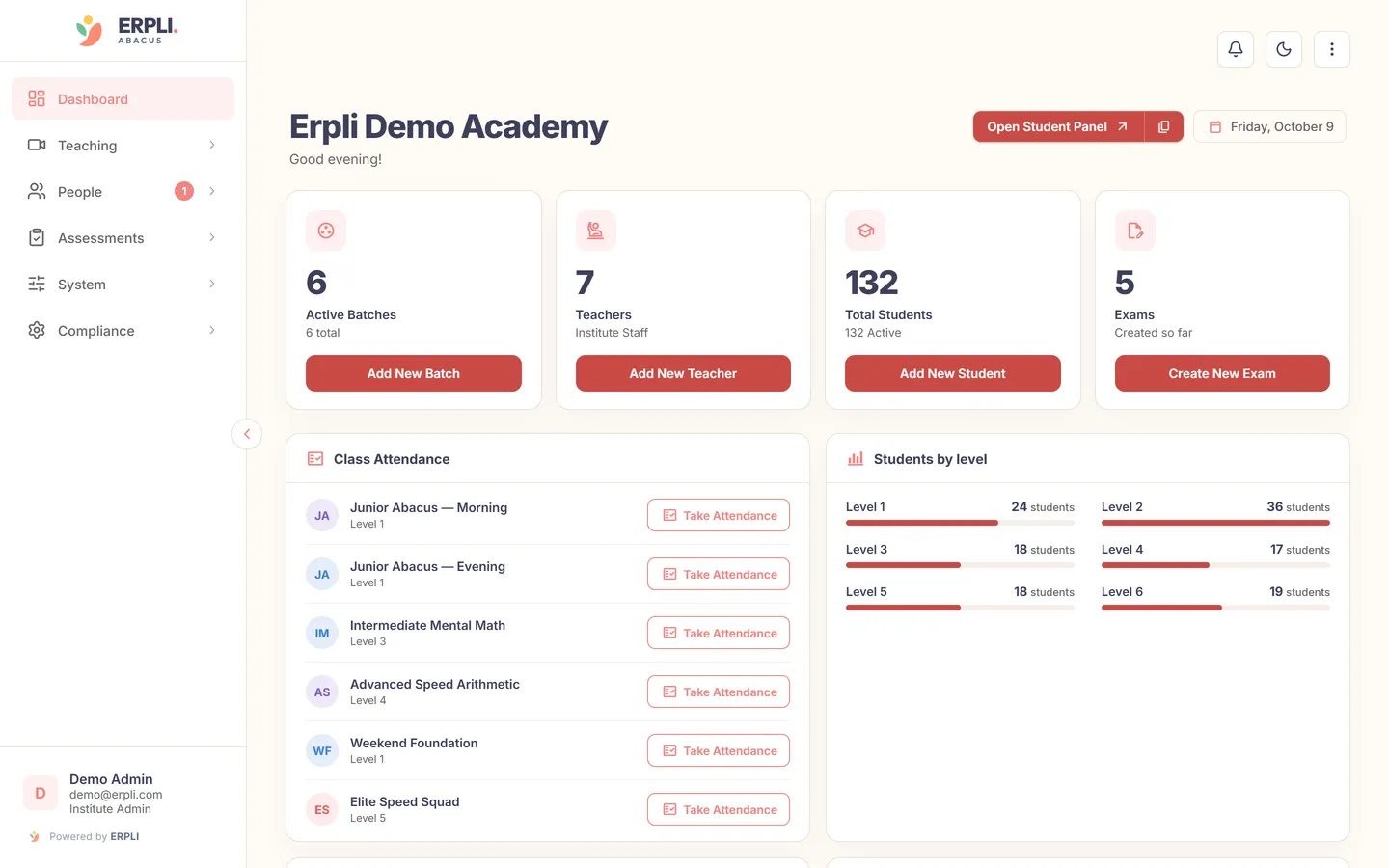
- Full control with software like ERPLI Abacus LMS: manage students, batches, attendance, fees, and analytics in one place.
- Customisable dashboards and reports.
- Automate certificates, exams, and practice assignments.
- In-house software saves time and improves transparency for school management.
Verdict: Which abacus model suits your school?
- Choose abacus franchise for schools if:
- You want a ready-made solution with external branding and less setup work.
- Parent demand for a specific brand is high.
- Choose in-house abacus if:
- You want cost savings, brand control, and curriculum flexibility.
- You have teachers who can be trained or are already familiar with abacus.
- Many top schools now run in-house abacus with digital tools for best value and school identity.
Next step
To see how in-house abacus could work for your school, book a free demo and compare options in detail.