ERPLI

Short answer: The big friend formula abacus method helps students add or subtract numbers quickly by using complements of 10. For every number from 1 to 9, there's a shortcut formula that makes calculation faster on the soroban or Indian abacus. Below you'll find a complete table, worked examples, and tips for teaching big friends, including combination formulas.
What is the big friend formula abacus method?
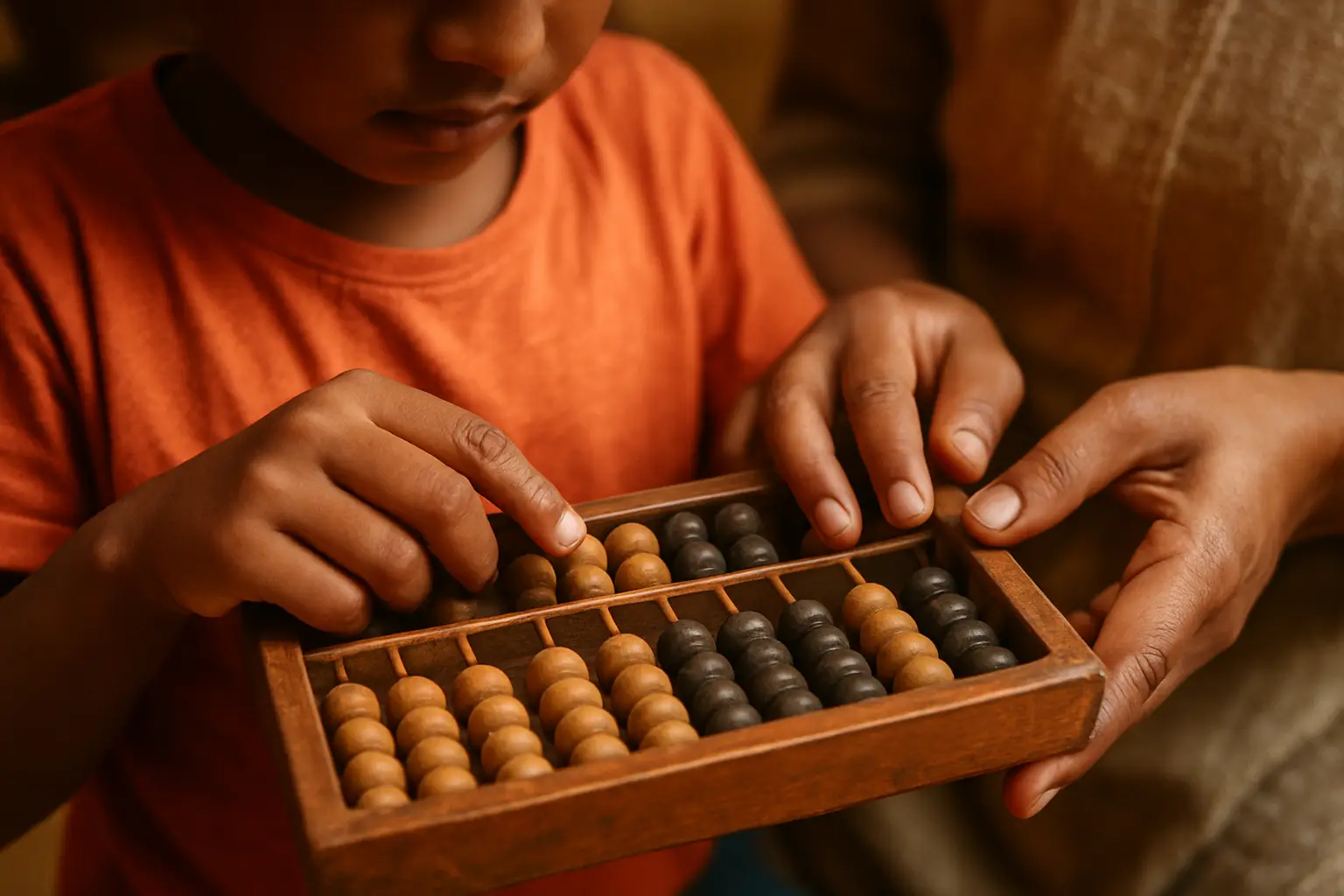
- In abacus, 'big friend' means the number that combines with another to make 10.
- For example, the big friend of 8 is 2 (because 8 + 2 = 10).
- The big friend formula abacus method lets you add numbers like 8 quickly by using subtraction and 10: +8 = -2 +10.
- This is especially useful on the Japanese soroban and Indian abacus, where each rod represents a digit (see Soroban basics).
- These formulas are a core part of mental abacus and speed calculation (mental abacus research).
Complete table: Big friend formulas (+1 to +9, -1 to -9)
Here’s the full table for big friend formula abacus shortcuts. Each formula shows how to add or subtract using complements:
| Operation | Formula | Example on Abacus |
|---|---|---|
| +1 | -9 +10 | 9 + 1: -9 +10 → 10 |
| +2 | -8 +10 | 9 + 2: -8 +10 → 11 |
| +3 | -7 +10 | 9 + 3: -7 +10 → 12 |
| +4 | -6 +10 | 9 + 4: -6 +10 → 13 |
| +5 | -5 +10 | 9 + 5: -5 +10 → 14 |
| +6 | -4 +10 | 9 + 6: -4 +10 → 15 |
| +7 | -3 +10 | 9 + 7: -3 +10 → 16 |
| +8 | -2 +10 | 9 + 8: -2 +10 → 17 |
| +9 | -1 +10 | 9 + 9: -1 +10 → 18 |
| -1 | +9 -10 | 10 - 1: +9 -10 → 9 |
| -2 | +8 -10 | 10 - 2: +8 -10 → 8 |
| -3 | +7 -10 | 10 - 3: +7 -10 → 7 |
| -4 | +6 -10 | 10 - 4: +6 -10 → 6 |
| -5 | +5 -10 | 10 - 5: +5 -10 → 5 |
| -6 | +4 -10 | 10 - 6: +4 -10 → 4 |
| -7 | +3 -10 | 10 - 7: +3 -10 → 3 |
| -8 | +2 -10 | 10 - 8: +2 -10 → 2 |
| -9 | +1 -10 | 10 - 9: +1 -10 → 1 |
- Students should repeat these until they become automatic.
- Download printable tables or try interactive formula drills in the abacus formula practice modules.
How to teach big friend formulas effectively
- Start with the concept of complements to 10 using real beads.
- Introduce one formula at a time (e.g., +9 = -1 +10) and practice with simple numbers.
- Use the digital abacus for visual learning (free online abacus).
- Mix formulas in worksheets to build confidence.
- Encourage students to say the formula aloud as they work.
- Teachers can assign daily drills using ERPLI or printed sheets.
Examples: Big friend formula abacus in action
- Addition example: To add 8 on the abacus, use the formula: +8 = -2 +10. 7 + 8: remove 2 from the ones rod (7 → 5), then add 1 on the tens rod. Answer 15.
- Subtraction example: To subtract 7, use -7 = +3 -10. 15 - 7: add 3 on the ones rod (5 → 8), then take 1 off the tens rod. Answer 8.
- These shortcuts reduce the need for counting beads one by one.
- Practice with real and digital abacus improves speed and accuracy.
Combination formulas: When big friends meet small friends
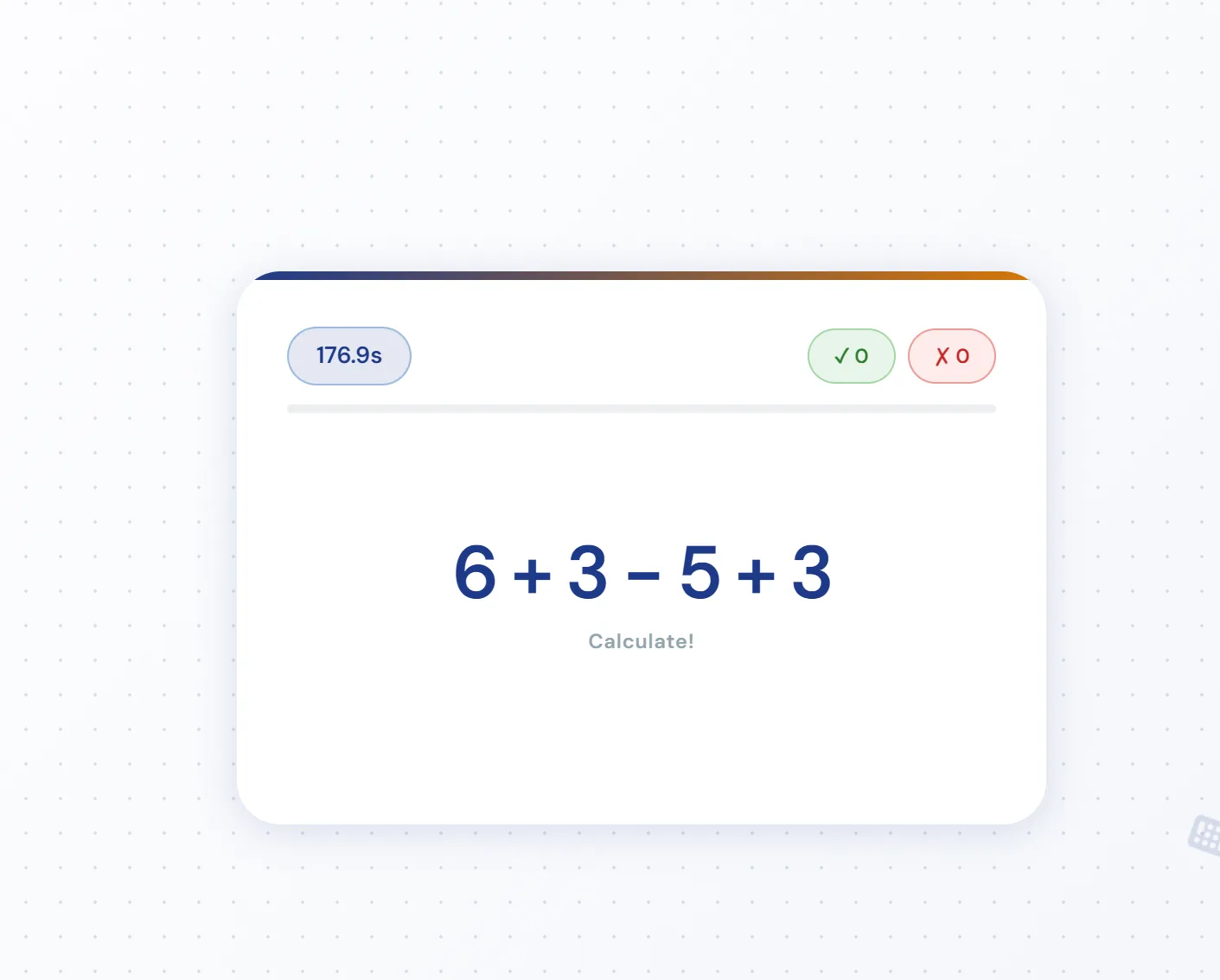
- When the big friend step needs a small friend too, you use a combination formula. This happens when the ones rod shows 5 to 8 and you add 6 to 9, or the reverse when subtracting.
| Operation | Combination formula | Example |
|---|---|---|
| +6 | +1 -5 +10 | 5 + 6 → 11 |
| +7 | +2 -5 +10 | 5 + 7 → 12 |
| +8 | +3 -5 +10 | 6 + 8 → 14 |
| +9 | +4 -5 +10 | 5 + 9 → 14 |
| -6 | -10 +5 -1 | 11 - 6 → 5 |
| -7 | -10 +5 -2 | 12 - 7 → 5 |
| -8 | -10 +5 -3 | 13 - 8 → 5 |
| -9 | -10 +5 -4 | 14 - 9 → 5 |
- Example: 5 + 6. The big friend of 6 is 4, but you can't take 4 lower beads from 5. So: +1 (6), -5 (1), +10 (11).
- ERPLI modules include mixed formula drills for advanced learners.

Practice tips for mastering big friend formula abacus
- Daily short sessions (10–15 minutes) build muscle memory.
- Use a mix of oral, written, and digital practice.
- Challenge students with timed drills and games (abacus games).
- Teachers can track progress using ERPLI’s analytics and assign tailored assignments.
- Consistency is more important than long sessions.
Big friend formulas and the mental abacus
- Mastering these formulas is key for mental abacus (anzan) calculations (Mental calculation basics).
- Students imagine the beads and apply formulas mentally.
- This skill supports faster arithmetic, better concentration, and confidence in exams.
- Many Indian abacus academies include big friend drills from Level 1 onwards (see syllabus).