ERPLI

Short answer: The small friend formula abacus technique helps you add or subtract 1 to 4 on a rod when the lower beads alone can't do it, by using the 5-bead. Teachers and students can master these essential formulas with clear examples and unlimited abacus practice for accuracy. Below is the full list of small friend formulas (+1 to +4, -1 to -4) with easy-to-follow worked examples.

The complete small friend formula abacus table
Here's a handy table of all small friend formulas used on the standard soroban (Japanese abacus):
| Number | Addition Formula | Subtraction Formula |
|---|---|---|
| +1 | +1 = +5 -4 | -1 = -5 +4 |
| +2 | +2 = +5 -3 | -2 = -5 +3 |
| +3 | +3 = +5 -2 | -3 = -5 +2 |
| +4 | +4 = +5 -1 | -4 = -5 +1 |
Example: To add 4, you do +5 (one upper bead down), then -1 (one lower bead up).
How to use the table
- Use an addition formula when you need to add 1 to 4 but not enough lower beads are free (e.g. 4 + 1, 3 + 3).
- Use a subtraction formula when you need to take away 1 to 4 but not enough lower beads are up (e.g. 5 - 1, 6 - 3).
- Practice each pair until it feels automatic.
What are small friend formulas?
- The small friend formula abacus method is used because you can't always add numbers directly (e.g., if all lower beads are already used).
- "Small friend" refers to the extra (or missing) beads needed to reach your target number.
- This technique is core in mental abacus (also called anzan) for speed.
- For more on abacus history and technique, see the Wikipedia abacus page.
Where are they used?
- Most Indian abacus academies use these formulas from Level 1 onwards.
- Applies to the Japanese soroban (1:4 abacus), the most common in India (details).
- Used in both physical and digital abacus practice.
Step-by-step examples for each formula
Adding with small friends
- +1 = +5 -4:
- Add 5 (move upper bead down)
- Subtract 4 (move four lower beads up)
- Example: 4 + 1. Beads show 4, no lower bead free. +5 (now 9), -4 (now 5)
- +2 = +5 -3:
- Add 5 (upper bead down)
- Subtract 3 (three lower beads up)
- Example: 4 + 2. +5 (now 9), -3 (now 6)
- +3 = +5 -2:
- Add 5, subtract 2
- Example: 3 + 3. +5 (now 8), -2 (now 6)
- +4 = +5 -1:
- Add 5, subtract 1
- Example: 1 + 4. +5 (now 6), -1 (now 5)
Subtracting with small friends
- -1 = -5 +4:
- Subtract 5, add 4
- Example: 5 - 1. -5 (now 0), +4 (now 4)
- -2 = -5 +3:
- Subtract 5, add 3
- Example: 6 - 2. -5 (now 1), +3 (now 4)
- -3 = -5 +2:
- Subtract 5, add 2
- Example: 7 - 3. -5 (now 2), +2 (now 4)
- -4 = -5 +1:
- Subtract 5, add 1
- Example: 8 - 4. -5 (now 3), +1 (now 4)
Why small friend formulas matter for teachers and students
- Reduces calculation time: Students move beads in two quick steps, not searching for available beads.
- Builds strong mental maths: These patterns form the basis for mental abacus (anzan) skills (learn more).
- Essential for speed exams: Most abacus competitions in India require rapid use of small friend formulas.
- Foundation for advanced topics: Later, these same patterns are used for multi-digit sums and subtraction.
- Consistency: Every teacher in an academy can teach the same method for uniformity.
How to teach and practice small friend formulas
- Start with physical abacus, showing each formula step-by-step.
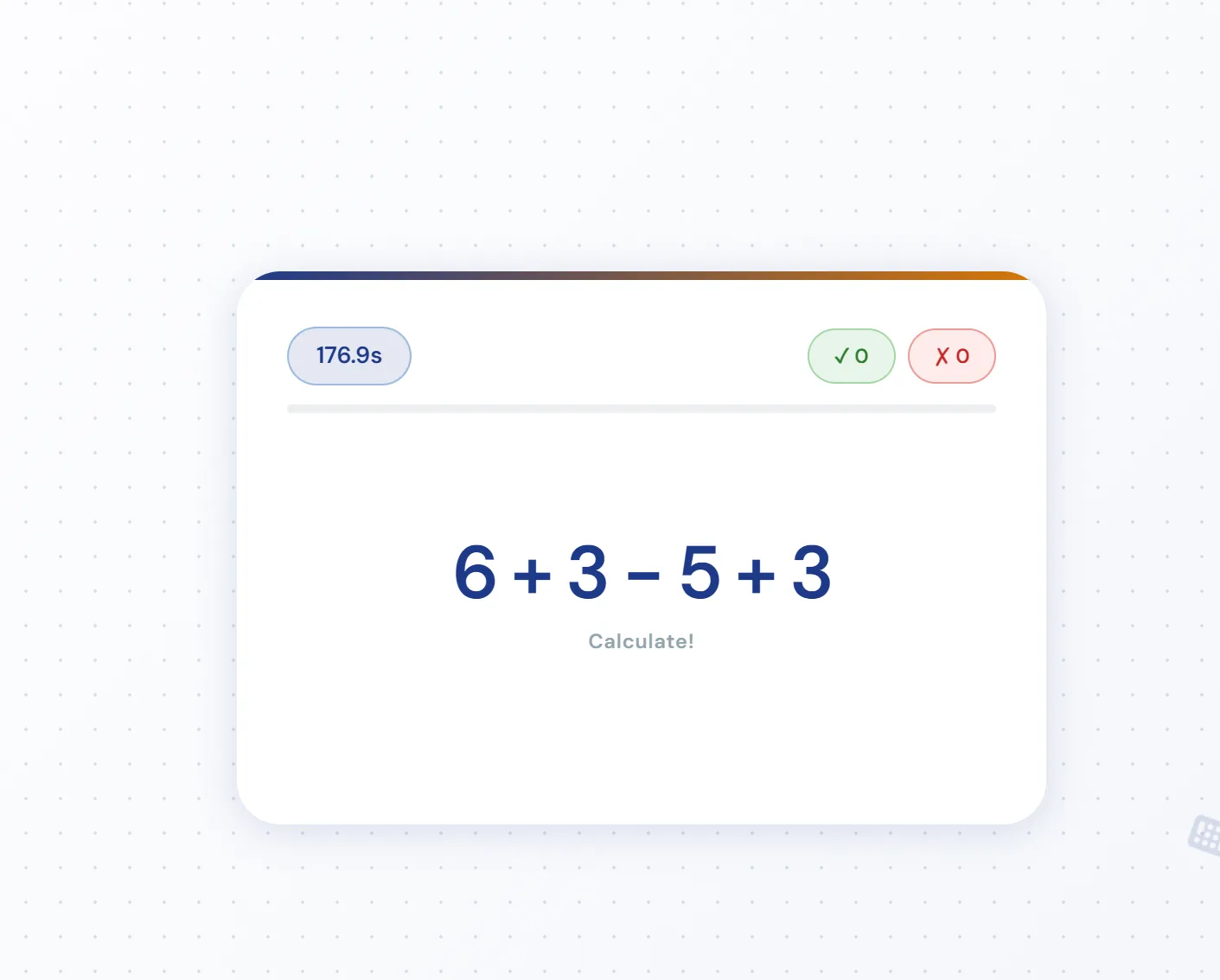
- Use the unlimited abacus practice modules to reinforce every formula.
- Assign students daily drills until each formula is automatic.
- Use worksheets and digital tools for variety.
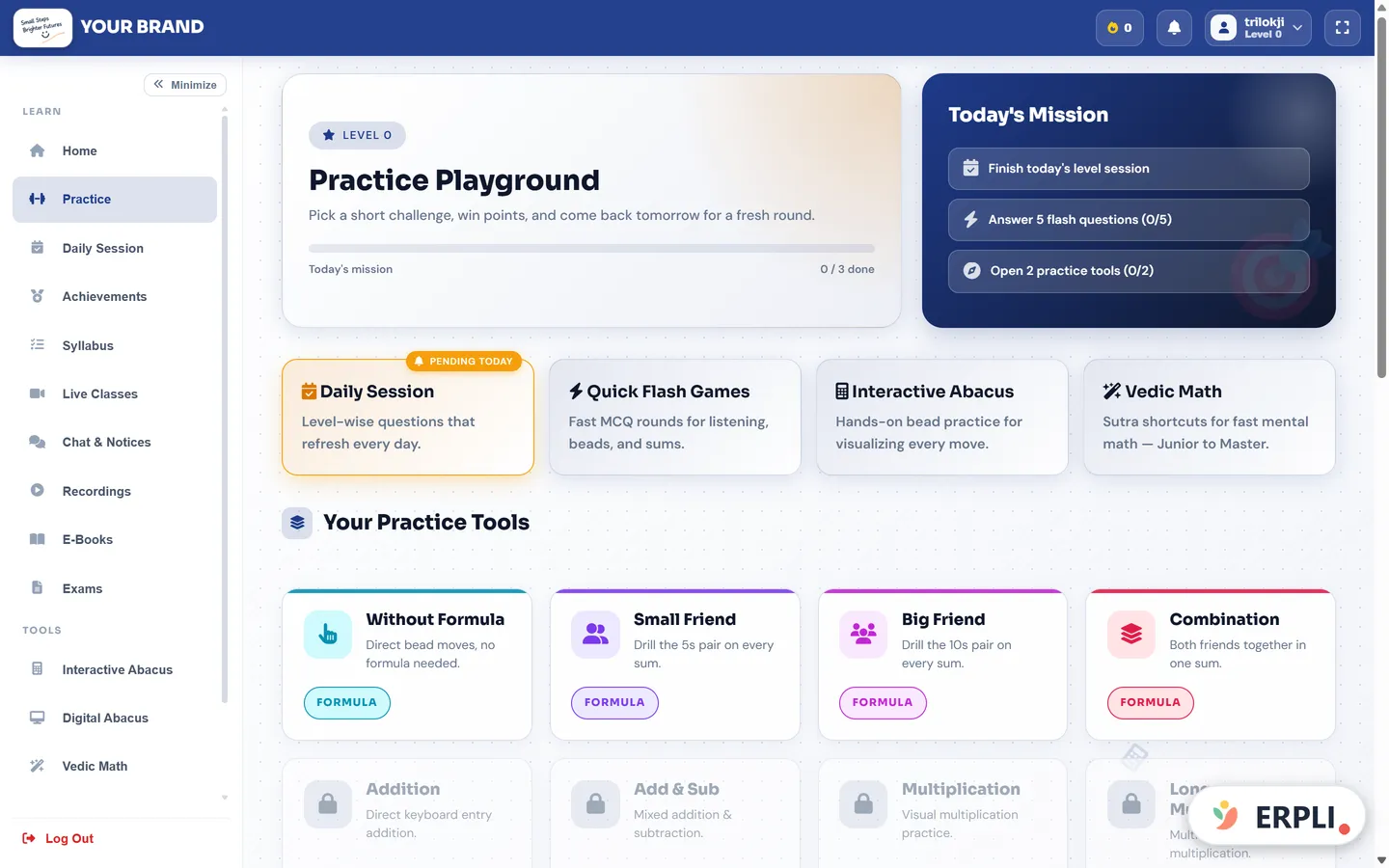
- ERPLI offers level-wise abacus practice, assignments, and real-time feedback for teachers.
- For home tutors, ERPLI for home tutors makes assigning and tracking these drills easy.
Typical mistakes and troubleshooting
- Skipping a step: Students may forget to finish the formula (e.g., do +5 but not -4).
- Wrong bead movement: Moving upper bead when lower bead is available, or vice versa.
- Not resetting between sums: Always return beads to 0 before starting a new sum.
- How to fix:
- Use slow, guided practice at first.
- Encourage students to say the formula aloud as they do it.
- Track errors using digital platforms like ERPLI.
Digital tools for mastering small friend formulas
- Use a free online abacus to demonstrate formulas during class.
- Students can practice on mobiles or tablets at home, with instant feedback.
- ERPLI's modules include formula drills, error tracking, and teacher analytics.
- Abacus syllabus by level shows where each formula is introduced.