ERPLI

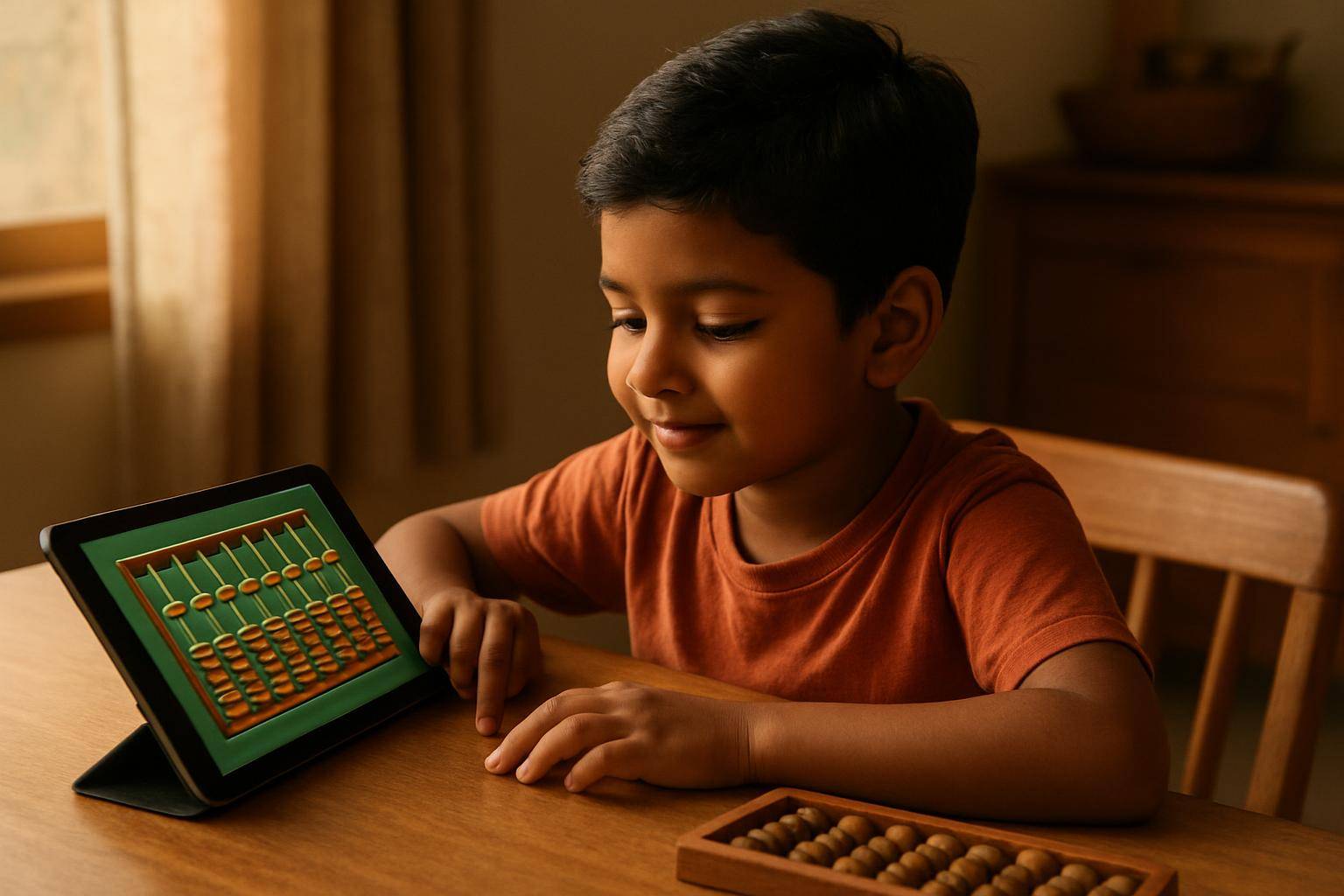
The best age to start abacus is typically between 4 and 7 years old, when children’s brains are highly receptive to new concepts and patterns. Many abacus academies accept students as young as 4, but the ideal age group depends on a child's readiness and maturity. As children grow, their approach to abacus learning and batch grouping also changes. For a detailed progression, see the abacus syllabus by level.
Key takeaways
- The best age to start abacus is 4–7 years old, but older children can also benefit.
- Abacus age group batches are usually 4–6, 7–10, and 11–14 years.
- Younger kids focus on basic counting and beads movement.
- Older children learn advanced mental math and speed calculation.
- Learning pace and teaching style are adapted for each age band.
- Many academies use software like ERPLI to manage age-grouped batches and track progress.

Why 4–7 Years Is Considered the Best Age to Start Abacus
- At 4–7 years, children’s brains are highly plastic, making it easier to absorb new skills like abacus for kids.
- Fine motor skills are developing, matching the physical bead movement required.
- Early exposure builds strong number sense and pattern recognition.
- Starting at this age also helps children develop concentration and listening skills, which are valuable for academics.
- Most abacus academies and home tutors start accepting students from age 4, with many offering abacus for 4 year old beginners.
Table: Typical Age Bands and Learning Focus
| Age Group | Typical Focus | Common Batch Names |
|---|---|---|
| 4–6 yrs | Counting, bead movement | Starter, Junior, Foundation |
| 7–10 yrs | Addition, subtraction, speed | Intermediate, Senior |
| 11–14 yrs | Mental maths, advanced ops | Advanced, Expert |
How Learning Changes by Age Group
4–6 Years: Early Starters
- Focus is on basic counting, recognizing numbers, and simple bead movements.
- Sessions are shorter (20–30 minutes), with more games and physical activities.
- Teachers use stories and visual aids to engage attention.
- Patience and repetition are key, as children learn at different rates.
7–10 Years: Developing Skills
- Children build on basics and start learning addition, subtraction, and simple multiplication.
- Sessions can be longer (30–45 minutes), with more structured practice.
- Mental abacus (visualizing the abacus in the mind) is introduced gradually.
- Children are grouped by both age and level of proficiency.
11–14 Years: Advanced Learners
- Focus shifts to mental calculation, speed, and accuracy.
- Problem-solving and competition preparation are common.
- Some academies combine abacus with Vedic Maths for this age group (see more).
- Peer learning and group challenges are encouraged to maintain interest.
How Abacus Academies Group Batches by Age
- Most academies use age bands (4–6, 7–10, 11–14) for batch formation.
- Some also consider school grade or previous experience.
- Grouping by age ensures teaching style, pace, and curriculum match the child’s maturity.
- ERPLI helps academies create, schedule, and manage age-based batches easily.
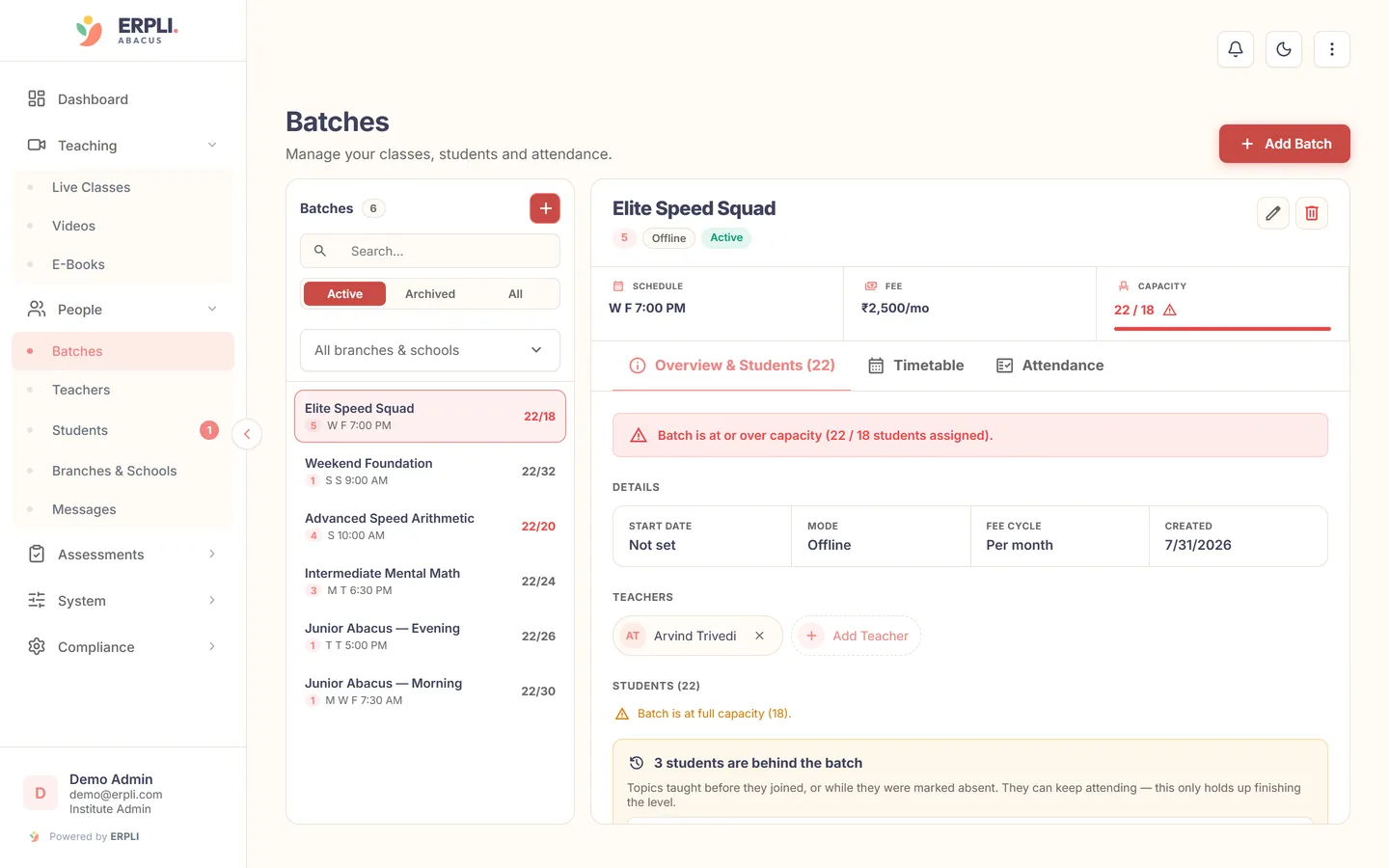
- Batch size typically ranges from 8 to 15 students for personal attention.
- Parents can request a trial session to assess the right fit for their child.
- Flexible batch timings accommodate school hours and weekends.
Choosing the Right Starting Level for Your Child
- If your child is a beginner, start with the basic abacus age group even if they are older.
- Many academies offer placement tests to identify the correct starting level.
- Don’t worry if your child is above 7 and just starting – older beginners can catch up quickly with focused practice.
- Abacus for kids is designed to be adaptable to a wide range of ages and skill levels.
Tips for Parents and Teachers
- Observe your child’s attention span and interest during trial sessions.
- If a child struggles with fine motor skills, a few extra weeks in the beginner batch is normal.
- Encourage regular practice at home for faster progress.
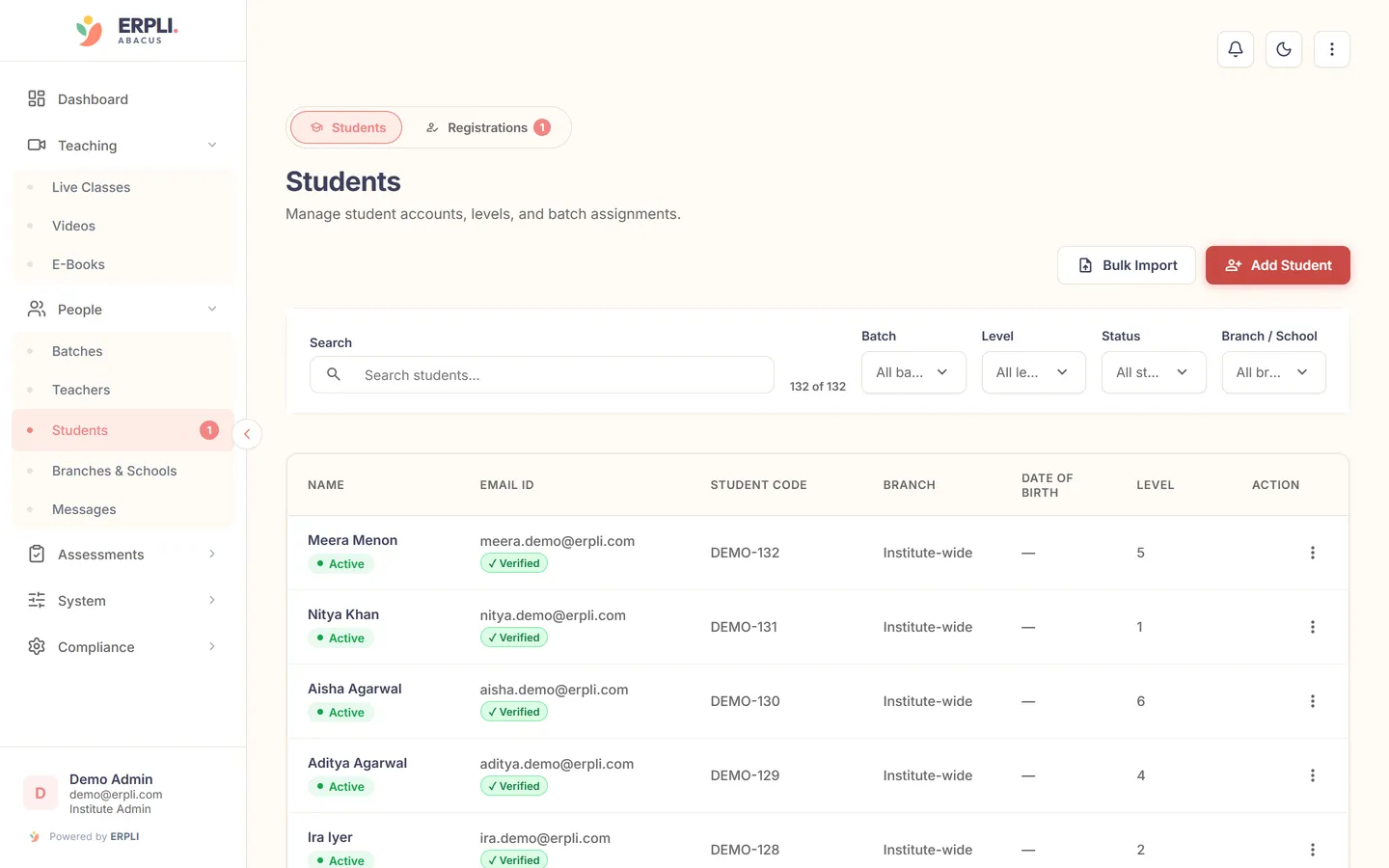
- Use digital tools like ERPLI Abacus LMS for unlimited practice modules, assignments, and progress tracking.
Common Questions: Abacus for 4 Year Olds and Older Kids
- Parents often ask if abacus for 4 year old is too early. Most children can start at 4, but readiness varies.
- Older children (11–14) may feel shy about joining younger batches. Academies usually have separate advanced batches for them.
- Transitioning from physical to mental abacus is gradual and depends on the child’s comfort, not just age.
- Teachers adapt their approach for each age group, using more games for young kids and more drills for older learners.
Example: Age Band Progression in an Academy
| Age Group | Duration per Level | Typical Progression |
|---|---|---|
| 4–6 yrs | 6–9 months | Foundation → Junior |
| 7–10 yrs | 5–7 months | Junior → Senior |
| 11–14 yrs | 4–6 months | Senior → Advanced |
Actual duration varies by city, academy, and student effort.
Software Support for Age-Based Grouping and Progress
- ERPLI and similar platforms allow easy creation and management of age-grouped batches.
- Teachers can assign age-appropriate worksheets, practice modules, and exams with a few clicks.
- Progress reports, attendance, and fee management are streamlined for each age band.
- See a sample abacus syllabus by level for how lessons are structured by age and ability.
Next step
Starting abacus at the right age gives your child a strong foundation in maths and logical thinking. Whether your child is 4 or 14, there is a suitable batch and level available. To see how ERPLI can help manage your academy’s batches and syllabus, [[cta: Book a free ERPLI demo | https://wa.me/918796675114?text=Hi%21%20I%27d%20like%20a%20demo%20of%20ERPLI%20Abacus]].