How to Start Abacus Classes From Home in India (Step-by-Step)
Learn how to start abacus classes from home in India with this step-by-step plan. Covers training, setup, costs, fees, and getting your first batch—no…
ETERPLI Team · 5 min read
Short answer: You can start abacus classes from home in India by getting trained, setting up a small learning space, buying basic materials, and enrolling your first batch—no franchise needed. This guide explains how to start abacus classes from home step by step, including costs, fees, and practical tips. You don’t need a big investment or a commercial space to launch a successful abacus home business.
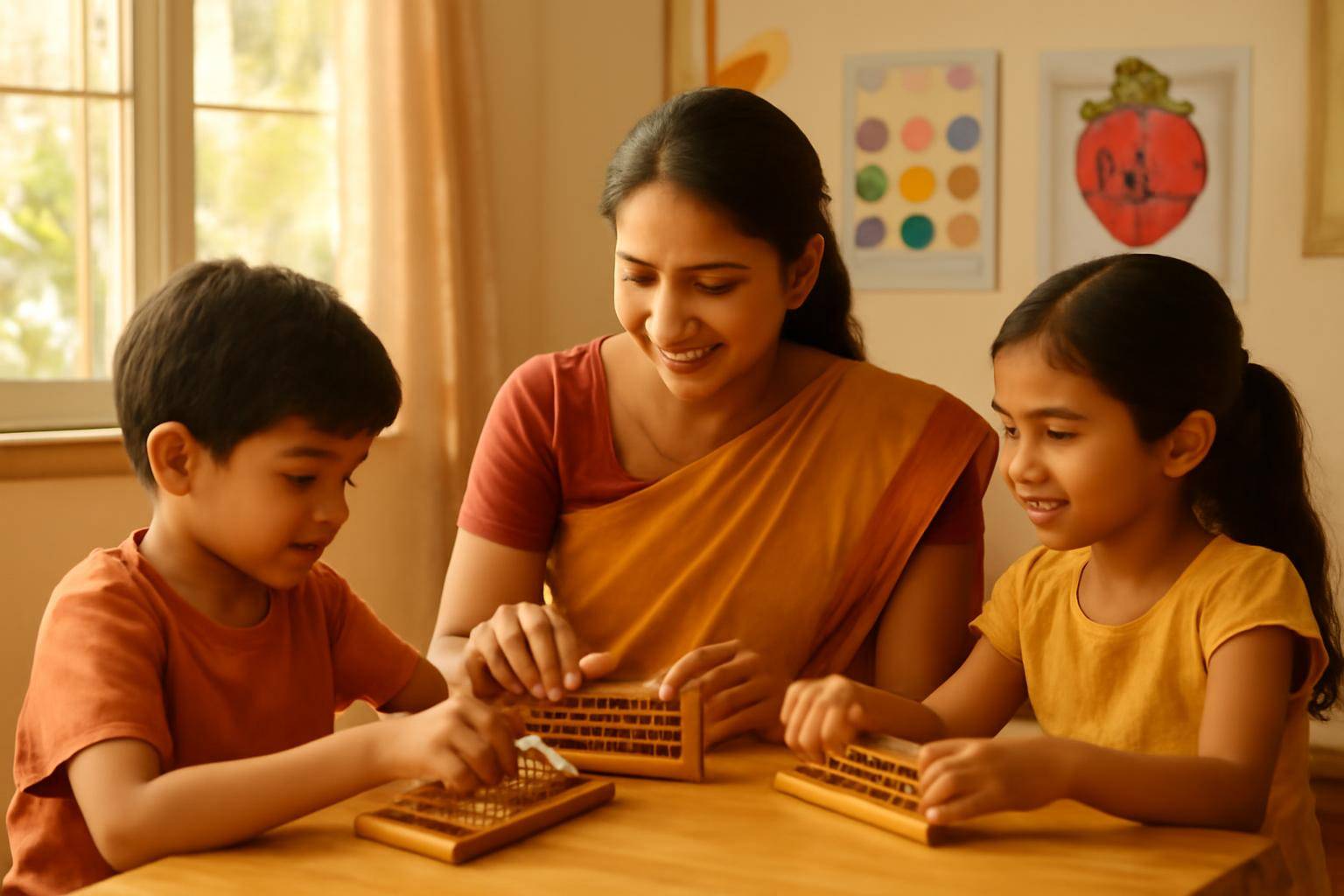
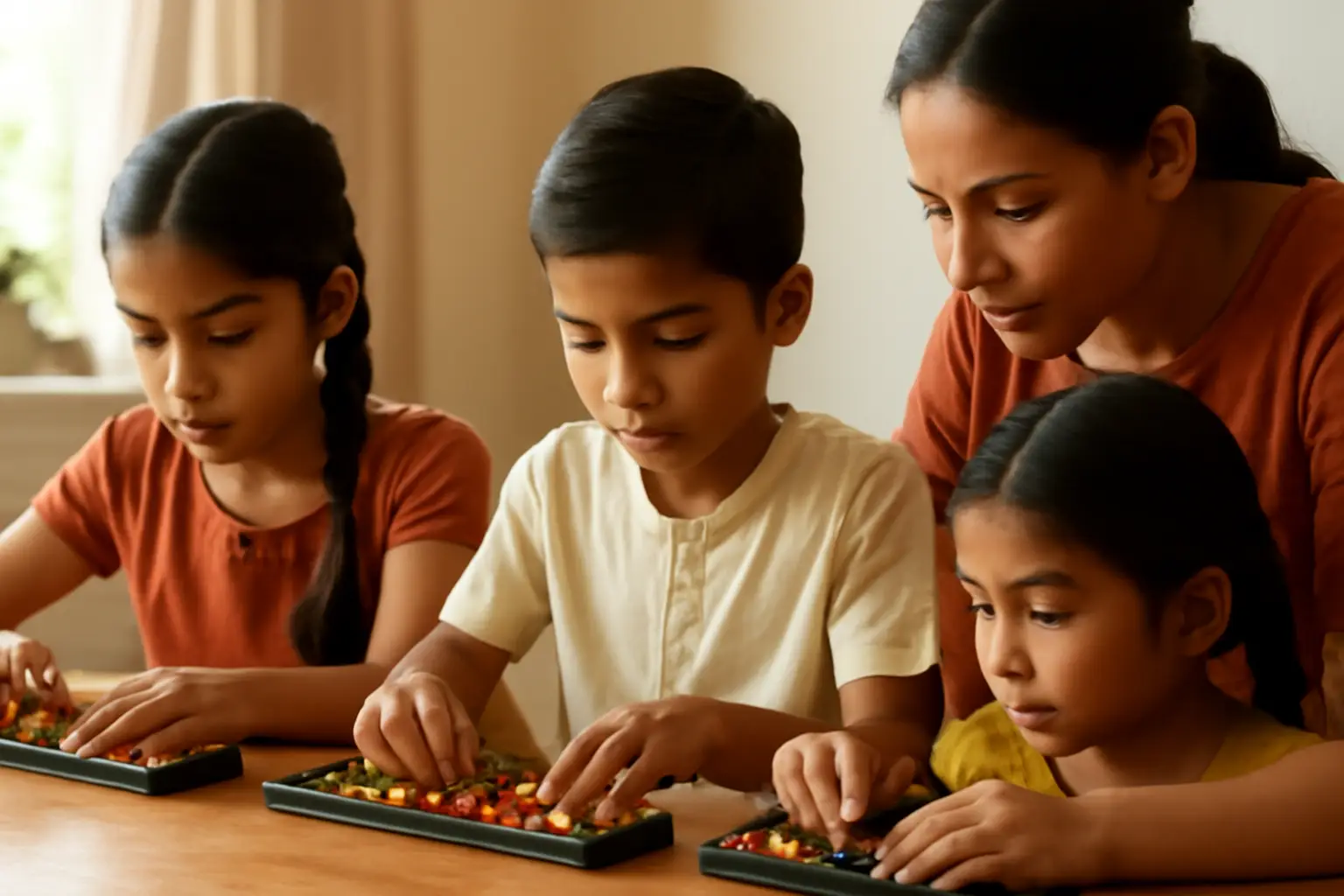
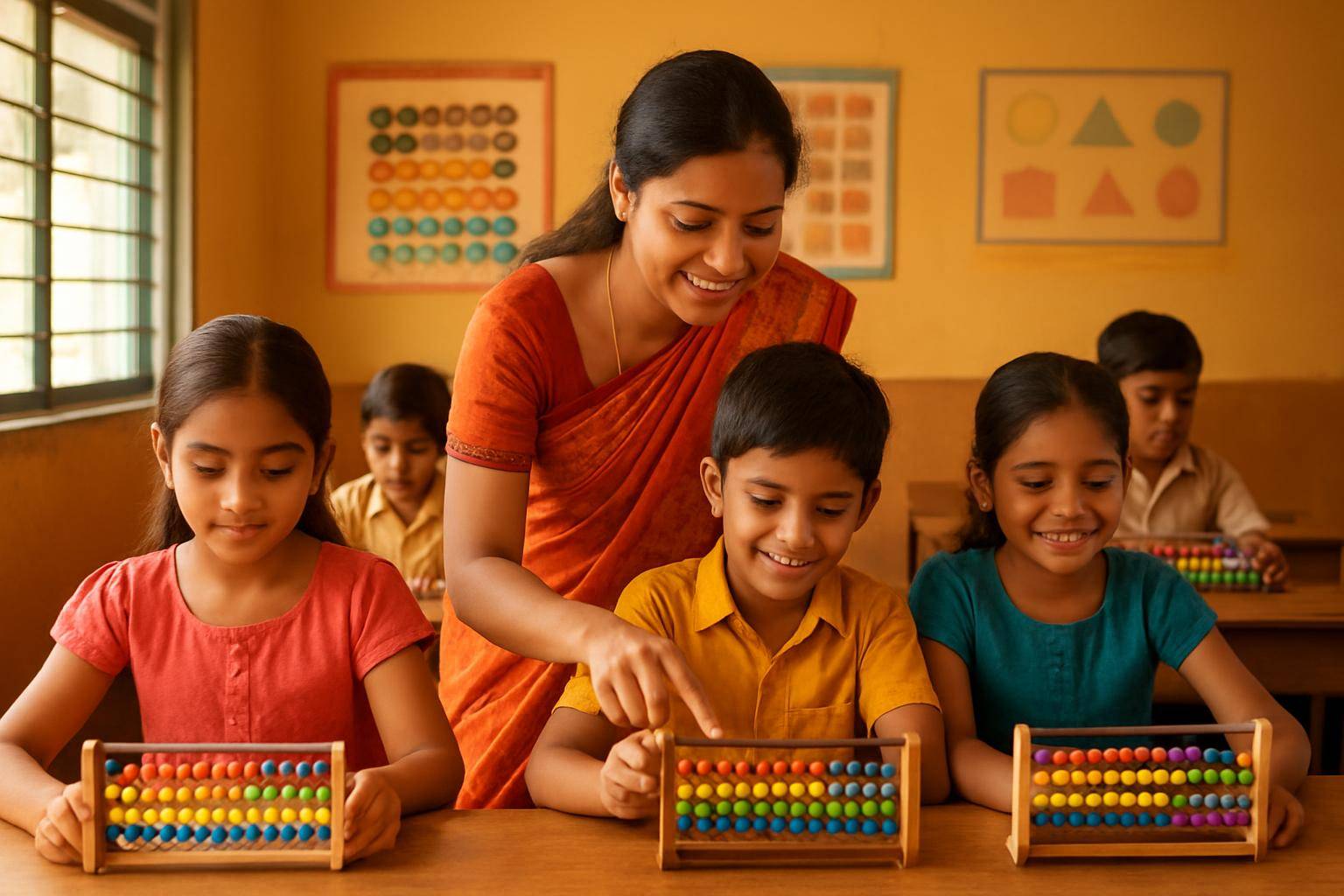
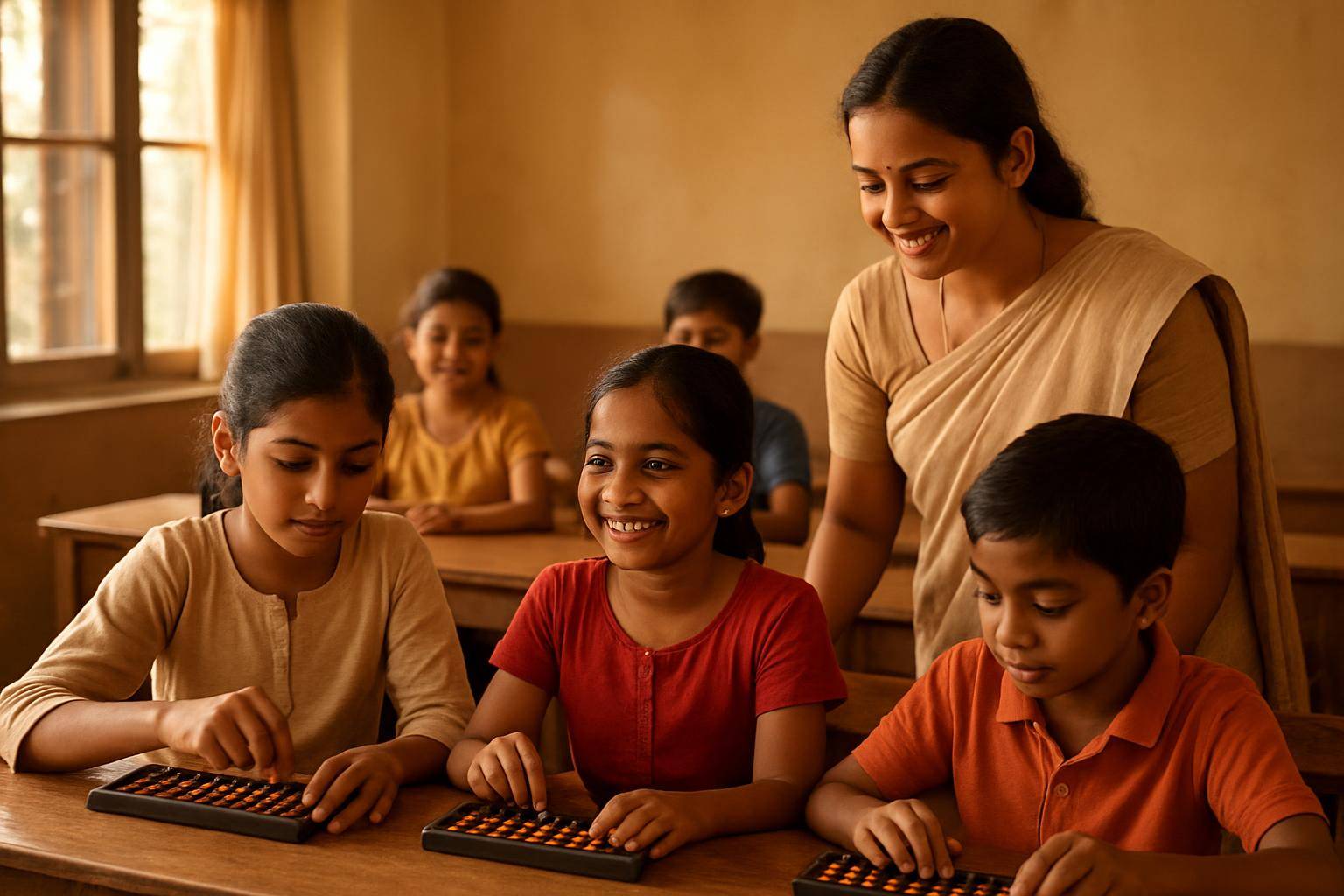
Children learning abacus at home with personal attention and hands-on practice.
Step 1: Decide Your Abacus Training Path
Get certified through online abacus teacher training, or train under a local abacus institute.
Most courses take 2–4 weeks and cost ₹2,000–₹8,000, depending on provider and depth.
Look for training that covers the Japanese soroban abacus (1:4 type), widely taught in India (Wikipedia).
Some academies offer in-person practice with children for real classroom experience.
If you want to start your own abacus brand, choose a course that allows independent teaching (not tied to a franchise).
Requirements for Training
Basic maths skills (Class 10 level is sufficient).
Willingness to work with children (ages 5–14).
A smartphone or laptop for online courses.
Step 2: Set Up Your Home Learning Space
Choose a quiet, well-lit room or a section of your living room.
You’ll need a table, 4–8 chairs, a whiteboard or chart paper, and a shelf for materials.
Keep the space child-safe (no sharp edges, easy access to washroom, good ventilation).
Display colourful abacus posters to create a fun, learning-friendly atmosphere.
For online or hybrid classes, a smartphone tripod and good internet are helpful.
Item
Typical Cost (₹)
Notes
Table + chairs
2,000–4,000
Reuse home furniture if possible
Whiteboard/markers
500–1,000
Or chart paper for beginners
Abacus kits (8–10)
1,000–2,000
Soroban type recommended
Books/worksheets
500–1,000
Level-wise, reusable
Posters/decor
300–500
Optional, for engagement
Total basic setup: ₹3,000–₹5,000 (varies by city and what you already own).
Step 3: Register Your Home Abacus Business (Optional)
Registration is not mandatory for a small home business, but it builds trust with parents.
For more than ₹2.5 lakh annual turnover, consider Udyam (MSME) registration (udyamregistration.gov.in).
GST registration is only needed above ₹20 lakh turnover (gst.gov.in).
List your classes on Google Business Profile (google.com/business/) for free local discovery.
Choose a simple brand name for your academy—no franchise fee required. See how to start your own abacus academy for more details.
Plan a simple 3–6 month curriculum: Level 1 (basics), Level 2 (speed), Level 3 (mental maths).
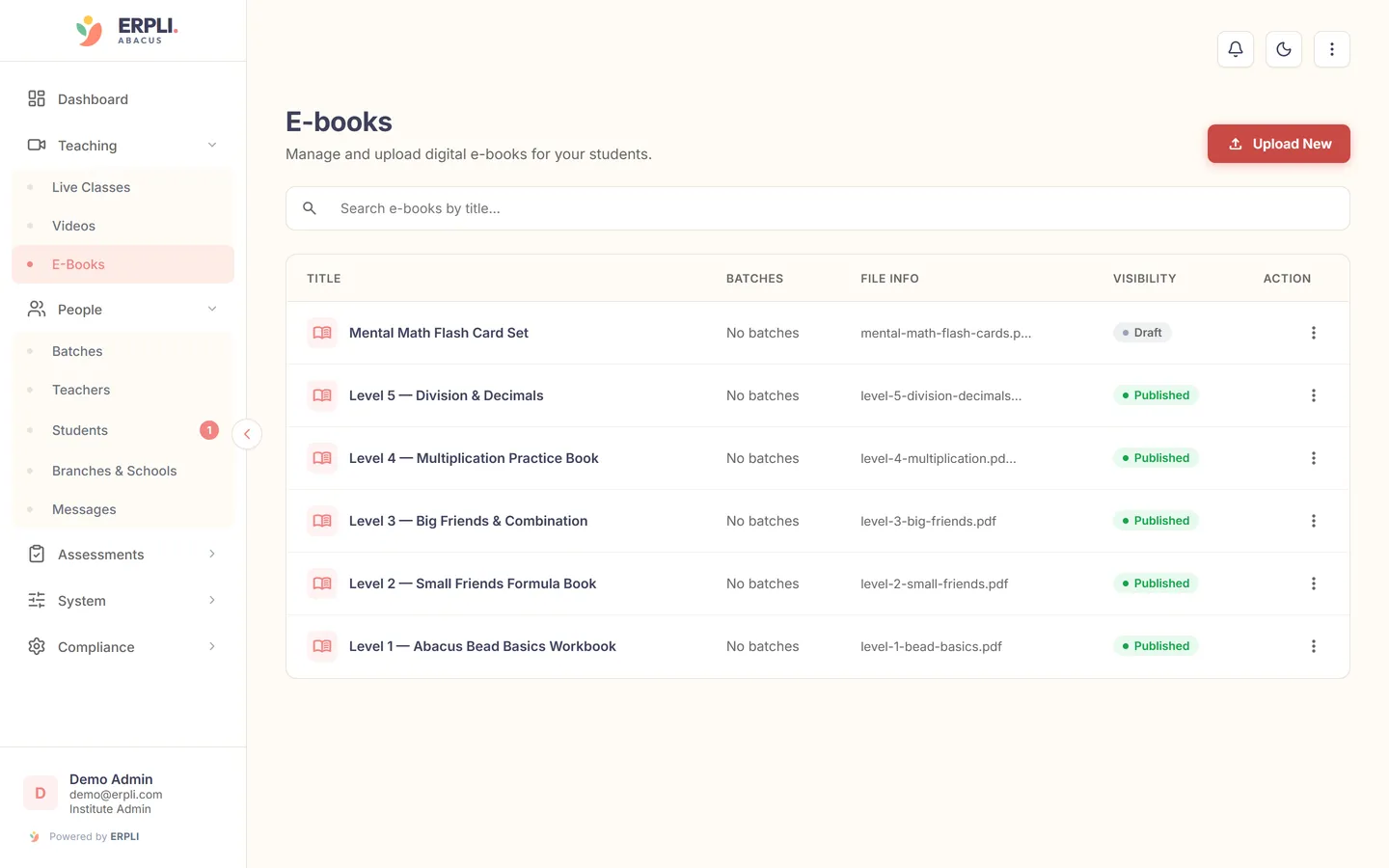
ERPLI provides a ready-made abacus syllabus by level, interactive e-books, and printable assignments.
For home tutors, digital practice and online exams are optional but help with engagement.
Resource
Where to Get
Cost Range (₹)
Abacus kits (soroban, 17 rods)
Online (Amazon, etc)
120–200 each
Worksheets/Books
Abacus publishers
50–200 each
Posters/Charts
Stationery shops
50–100 each
Digital practice (optional)
ERPLI, free/paid
₹0–₹50/student
E-book library with level workbooks (ERPLI)
Step 5: Set Your Fees and Batch Size
Typical fees for abacus classes at home: ₹500–₹1,200 per student per month, depending on city and reputation.
First batch size: 4–8 students is ideal for personal attention.
Offer a free demo class to attract your first students.
Collect monthly fees in advance; provide receipts for trust.
Digital fee collection (like ERPLI’s fee management) saves time and avoids confusion.
City/Town Type
Typical Monthly Fee per Student (₹)
Metro (Delhi, Mumbai)
900–1,200
Tier 2/3 City
700–900
Small Town/Village
500–700
Adjust fees as you gain experience and build results.
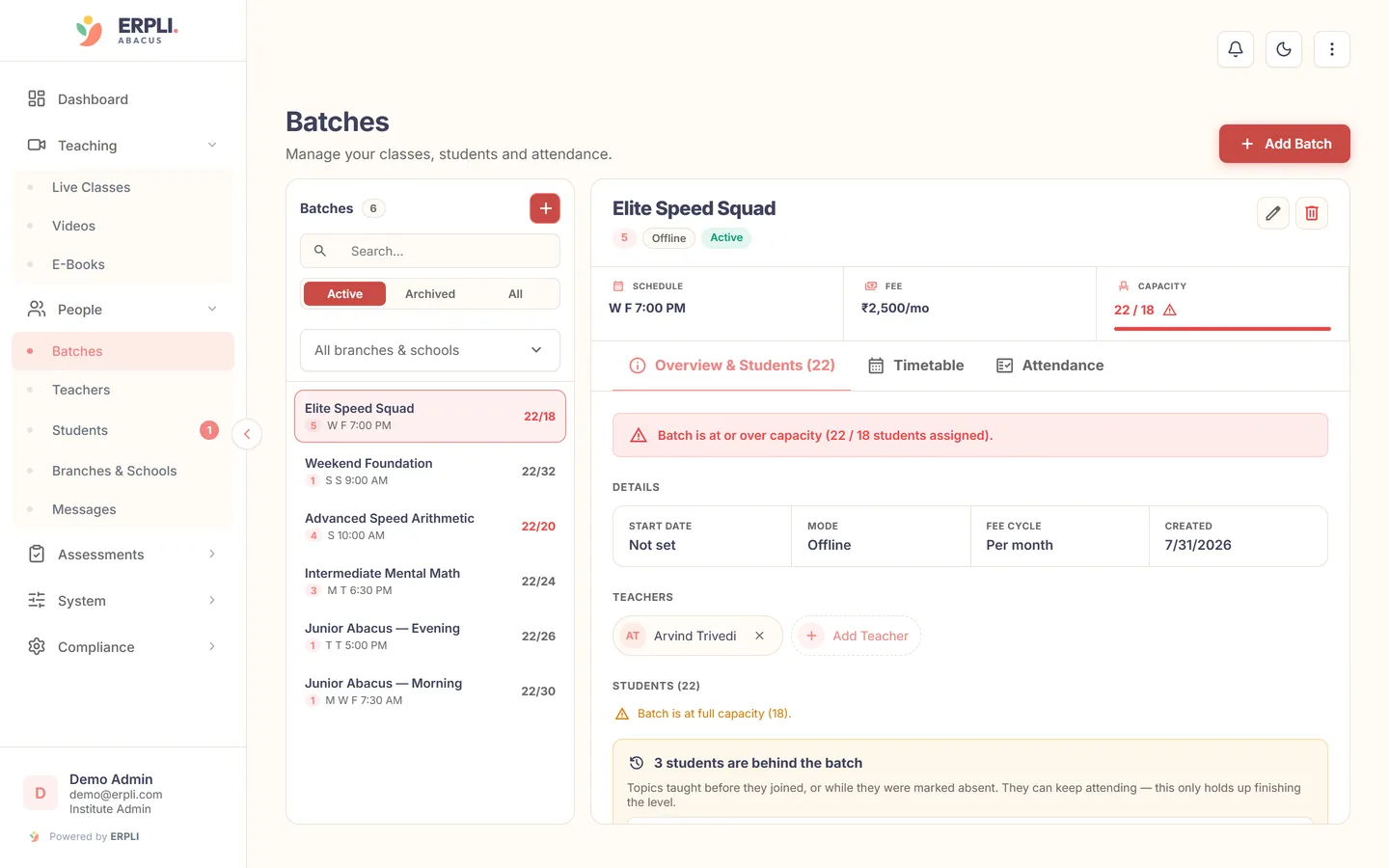
Batches with schedule, fee, capacity and teacher (ERPLI)
Step 6: Enrol Your First Batch and Start Teaching
Spread the word among neighbours, WhatsApp groups, and local schools.
Share photos of your setup and demo class on social media.
Ask parents for referrals after the first batch.
Run 2–3 classes per week, 60–90 minutes each.
Use games and challenges to keep children engaged.
Track attendance and progress (ERPLI’s student management helps automate this).
Tips for Early Success
Personal attention and friendly teaching are your biggest strengths.
Celebrate small achievements with certificates or badges.
Use digital practice (like ERPLI’s assignments) for extra value.
Regular feedback to parents builds trust and word-of-mouth.
Step 7: Manage, Grow and Automate Your Abacus Home Business
As your batches grow, use software like ERPLI to manage students, fees, practice, exams, and certificates in one place.
ERPLI costs ₹50 per student per month up to 30 students (see Abacus LMS pricing), with all teaching, branding, and parent communication tools included.
For more than 30 students, rates drop to ₹45, ₹40, or ₹30 per student as you scale.
Automate reminders, attendance, and certificate generation.
Consider hybrid or online classes to reach more students beyond your locality.
Track learning outcomes and progress with analytics.
Practise on our free virtual abacus in your browser — no sign-up, no download.
Frequently asked questions
What qualifications do I need to start abacus classes from home?
You do not need a formal teaching degree. Most tutors complete a short abacus teacher training course (2–4 weeks) and have basic maths skills. The key is confidence in teaching children and familiarity with the abacus method.
How much does it cost to start abacus classes at home?
Basic setup costs (abacus kits, books, whiteboard, furniture) typically range from ₹3,000–₹5,000, depending on what you already have. Training courses cost ₹2,000–₹8,000. There are no mandatory franchise or registration fees.
How many students should I start with in my first batch?
Most home tutors start with 4–8 students in their first batch. This allows personal attention and helps you gain experience before expanding to larger groups or multiple batches.
Do I need to register my abacus home business?
Registration is optional for a small home business, but it can build trust with parents. For higher turnover, consider Udyam (MSME) registration or GST if your revenue exceeds the threshold.
Can I run abacus classes at home without a franchise?
Yes, you can start abacus classes from home independently. No franchise is required. You can use your own brand, curriculum, and materials, or adopt digital tools like ERPLI to support your classes.
Run your institute on ERPLI
Your own branded app, website and LMS — with fees, attendance and classes in one place.
 ERPLI