ERPLI
A useful abacus practice routine combines number reading, a small set of appropriate calculations and time to correct one mistake. Start with a manageable session, such as ten minutes, and adjust it with the teacher. The number is a planning suggestion, not a guarantee that every learner needs exactly the same amount of practice.
Parents often ask what to do between weekly classes. More pages are not always the answer. A child who repeats an incorrect movement twenty times needs a clearer demonstration before another worksheet. This guide gives families a repeatable home session and shows tutors how to review it without turning every evening into a speed test.

First agree on the exact skill
Ask the teacher for the operation, digit range and formulas currently being practised. “Do some abacus” is too broad. “Read two-digit numbers and complete direct additions that do not require a new complement rule” gives a parent a clearer task. If you cannot tell whether a worksheet fits that description, ask for one completed example.
Keep the lesson method consistent. A video using a different frame or technique may be interesting, but it can introduce a procedure the class has not taught. Use the syllabus as a discussion aid and the teacher's current assignment as the immediate guide. A course level is less informative than knowing which specific movements the child can perform independently.
A ten-minute session you can adapt
| Approximate time | Activity | What the adult observes |
|---|---|---|
| 2 minutes | Set and read familiar numbers | Correct units rod and active beads |
| 4 minutes | A small set of taught calculations | Method, accuracy and help needed |
| 2 minutes | Revisit one error | Whether the correction is understood |
| 2 minutes | Explain a result and record the session | Independent understanding and next task |
Stop earlier if the child is tired or the task is clearly unsuitable. Extend only when it remains useful and fits the teacher's plan. These blocks are flexible. An entire session spent resolving one place-value misunderstanding may accomplish more than finishing a large timed sheet.
Start by reading numbers, not guessing answers
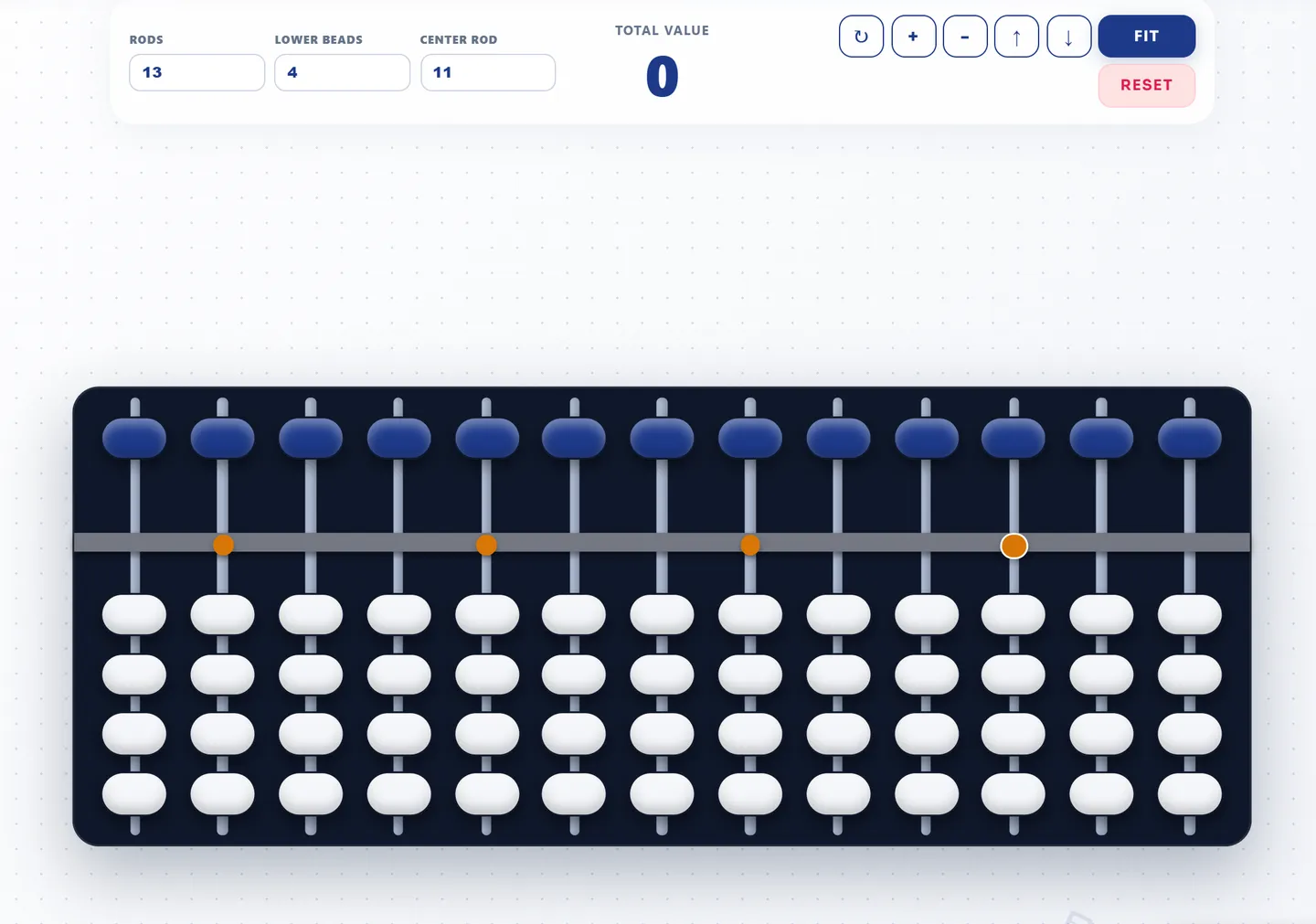
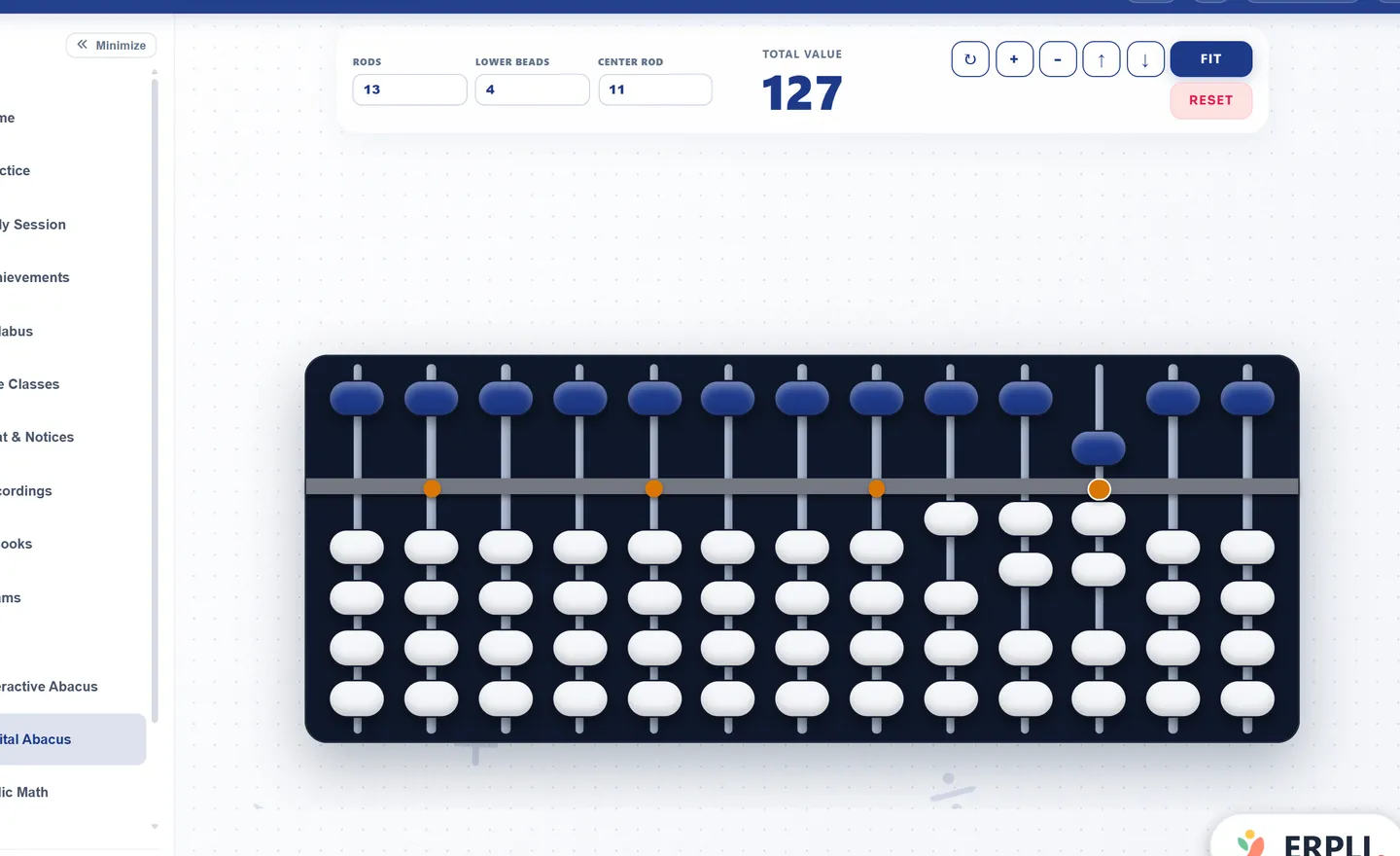
Choose a units rod and keep it consistent for the exercise. Ask the child to set 12, 21 and 40. Have them read each display aloud and identify the tens and units. Watch whether the spoken number matches the representation rather than supplying the answer immediately. Then ask the learner to reset the frame before the first calculation.
For digital work, check that the board has really reset and that a touch has not activated a neighbouring bead. A child can understand the arithmetic and still struggle with a small phone screen. Use a larger display or a physical frame when the interface is creating repeated accidental moves. See the digital and physical comparison for a practical way to separate these issues.
A small worked practice set
Here is an illustrative set for a learner who has been taught direct addition and subtraction on a standard soroban. It is not a placement test. Start with 12, add 2 and read 14. Reset. Start with 23, subtract 1 and read 22. Reset. Start with 31, add 3 and read 34. Ask the teacher to confirm that these movements suit the current lesson.
The reset matters because the next starting value should not depend on an unnoticed previous error. After each answer, ask the child to describe the change on the units rod. If they say “I moved beads until it looked right,” slow down and demonstrate one operation again. The useful outcome is a repeatable procedure that represents the arithmetic.
Keep an answer key separately so a parent does not need to calculate under pressure while supervising. Check the answer after the attempt. If you display the answer continuously, the child may copy the final representation without carrying out the operation. Match feedback to the purpose of the activity rather than assuming instant scoring always teaches the method.
Correct one mistake properly
When an answer is wrong, write down the intended starting value, operation and observed result. Ask the child to replay the movements slowly. Notice where the first difference occurs: reading the question, setting the number, choosing the rule or making the movement. This makes the next task specific.
For example, if 23 + 1 becomes 33, inspect whether the child moved a bead on the tens rod instead of the units rod. Giving five more addition sheets will not directly address that place-value error. Reset, show the two rods and repeat the representation step. Return to the original sum after the child can explain which rod should change.
When should you add a timer?
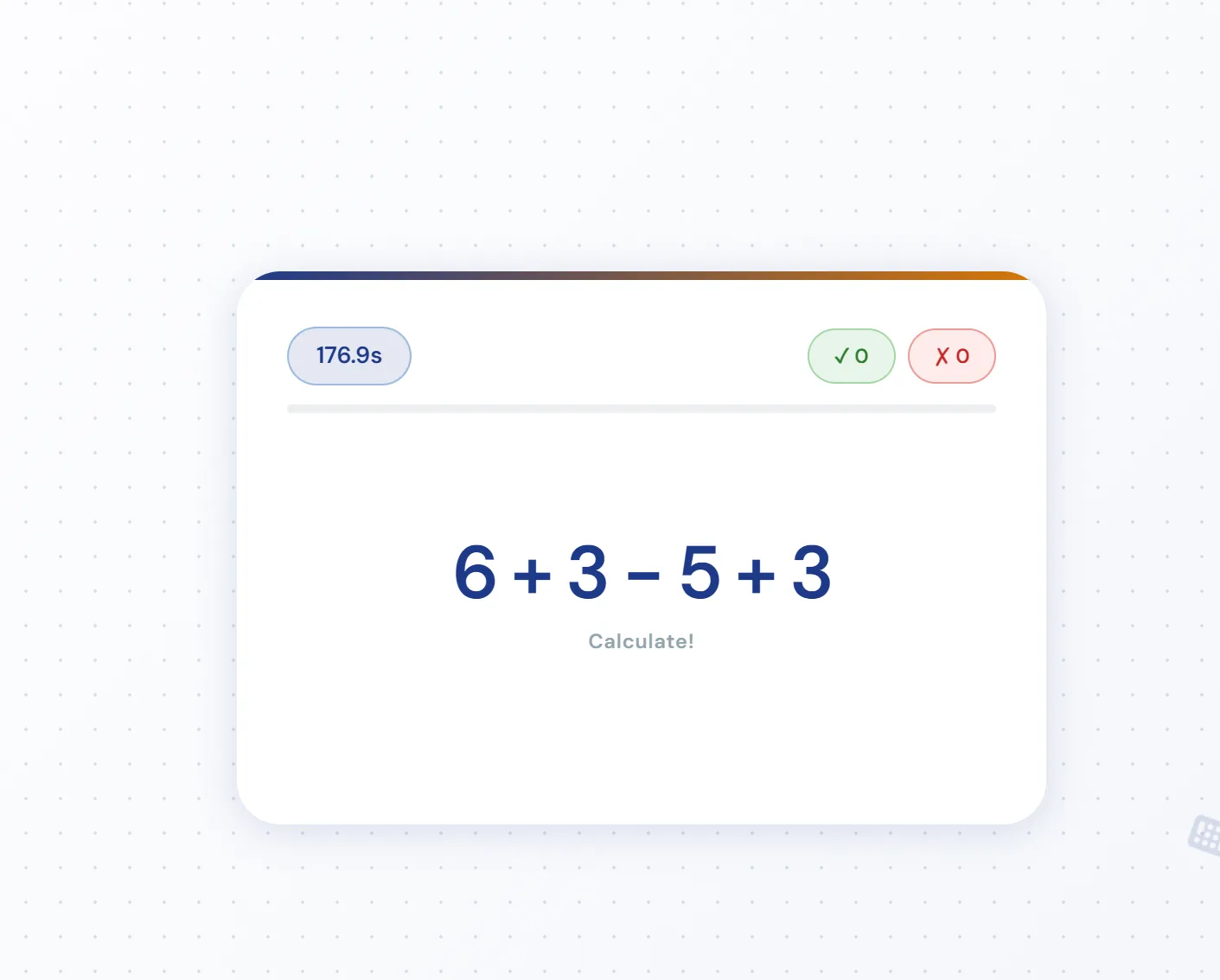
Use timing when the learner understands the relevant task and the teacher wants to assess pace. First establish an accurate untimed baseline. Then compare equivalent questions, with the same operation type, number size and method. Do not compare a five-question direct-addition set with a longer mixed-formula set and call the difference a loss of speed.
If the child rushes and guesses, remove the timer for correction work. A timer can measure performance, but it does not explain why a learner got stuck. Praise a clear correction or independent explanation as well as a faster result. The practice tools can support activities, while the teaching decision remains with the instructor.
What community discussions contributed
We searched community sources on 9 November 2026. A Reddit discussion about learning abacus asks about starting resources and duration. An October 2026 mental-maths discussion also asks which drills help and when improvement becomes noticeable. These questions recur across dates, but the comments are personal experiences rather than a prescribed training schedule.
Our updated practical answer is to define a task, observe errors and review comparable work. A community suggestion of a fixed number of practice minutes should not override the child's lesson needs. Likewise, a claim that someone improved quickly does not establish that another learner will reach the same milestone on the same timetable.
What if you miss several days?
Resume with a familiar number-reading task and a short untimed set. Do not double the workload as a penalty. If the child has forgotten a rule, contact the teacher for a revision activity rather than using a harder worksheet to make up the calendar. A missed session is information for planning, not a reason to declare the whole course unsuccessful.
For busy weeks, agree on a minimum useful task: perhaps setting several numbers and correcting one previously discussed sum. Record what was actually done. A truthful short log helps the teacher more than a completed checklist that hides heavy adult prompting. Build the routine around the household's real schedule.
A record parents can keep without a dashboard
Use four columns: date, task, independent result and help needed. “Five sums, four correct, reminded about the units rod” gives the teacher a starting point. Save one example that illustrates the problem. Avoid recording only time spent or a total score, since both can hide the reason for an error.
If your academy uses daily sessions, ask which activities and results are captured automatically. Physical-frame practice may still need a separate note. A software report should support the conversation, not imply that unrecorded work never happened or that every completed digital task was independent.
What research does not tell parents
A three-year classroom trial found an arithmetic advantage from the mental-abacus programme studied. It did not establish this ten-minute outline as an optimal daily dose. Use a suggested routine as a starting arrangement and change it when observation or teacher feedback gives you a reason.
At the weekly review, ask three simple questions: what is now independent, which error keeps recurring and what is the next manageable task? Those answers make home practice useful. A calm, specific routine gives children a clearer path than trying to finish the largest possible number of sums every day.