ERPLI
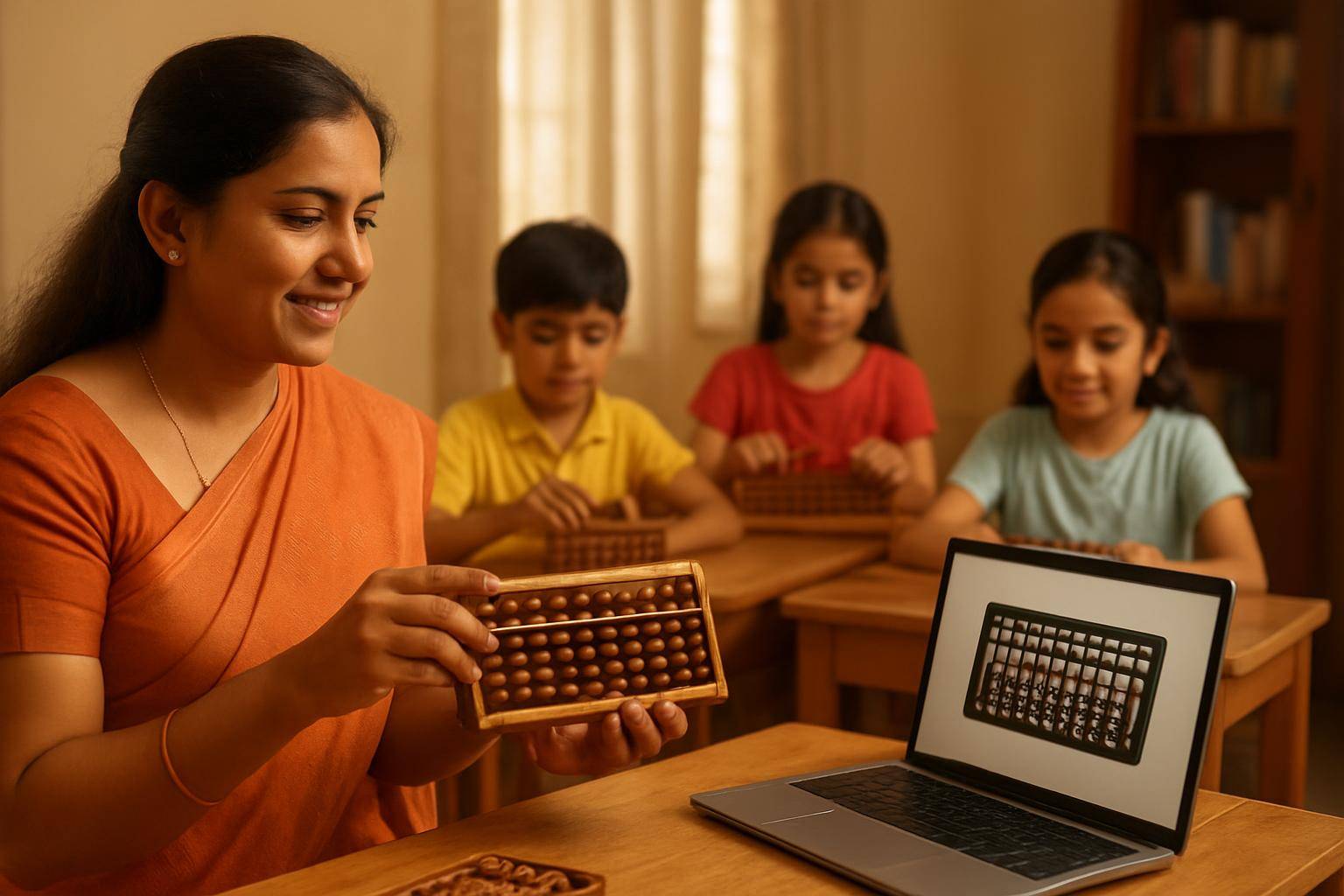
Short answer: To teach abacus online, run small batches of 6–10 students in 45-minute classes, two or three times a week. Use a digital abacus on screen so everyone can see the beads, and give daily practice that is checked automatically. The teaching method is the same as offline. What changes is how you see each child's work.
This post covers running an online abacus batch as a business: batch size, timings, fees, and how to keep students from dropping off. For the minute-by-minute lesson itself, see our online class plan.
How big should an online abacus batch be?
| Level | Batch size | Why |
|---|---|---|
| Level 0–1 (ages 5–7) | 4–6 | You need to see every child's fingers and frame |
| Level 2–4 | 6–10 | Students can work on their own between checks |
| Level 5+ and mental maths | 10–15 | Mostly speed drills and Flash Anzan, easy to run in a group |
Larger batches are possible, but checking stops working beyond these numbers. A student who sets beads wrongly three classes in a row, without you noticing, is the one who quits in month two.
What timings work for online batches?
- Weekday evenings 5:00–7:30 pm fill first, because school and tuition are over
- Weekend mornings suit families with busy weekdays and NRI students in other time zones
- 45 minutes is the upper limit for children under 9. Longer than that, attention drops.
- 2 classes a week plus daily home practice is the most common pattern. 3 a week suits faster batches.
Online classes let you run batches back to back with no travel time. Many home tutors teach four batches in an evening that would be two in a physical centre.
What should you charge for online classes?
Online abacus classes in India usually charge about the same as offline, or slightly less. Families value the saved travel more than a discount. Our abacus class fees guide gives city-wise ranges.
Do the maths before you set your fee. With 4 batches of 8 students at ₹1,500 a month, you earn ₹48,000 a month. Your software cost on ERPLI for those 32 students is ₹45 each, which is ₹1,440 a month, or about 3% of fees. A franchise royalty is usually 15–20%.
What do you need to teach abacus online?
- A laptop and a stable connection. A phone is fine for students, but hard for the teacher.
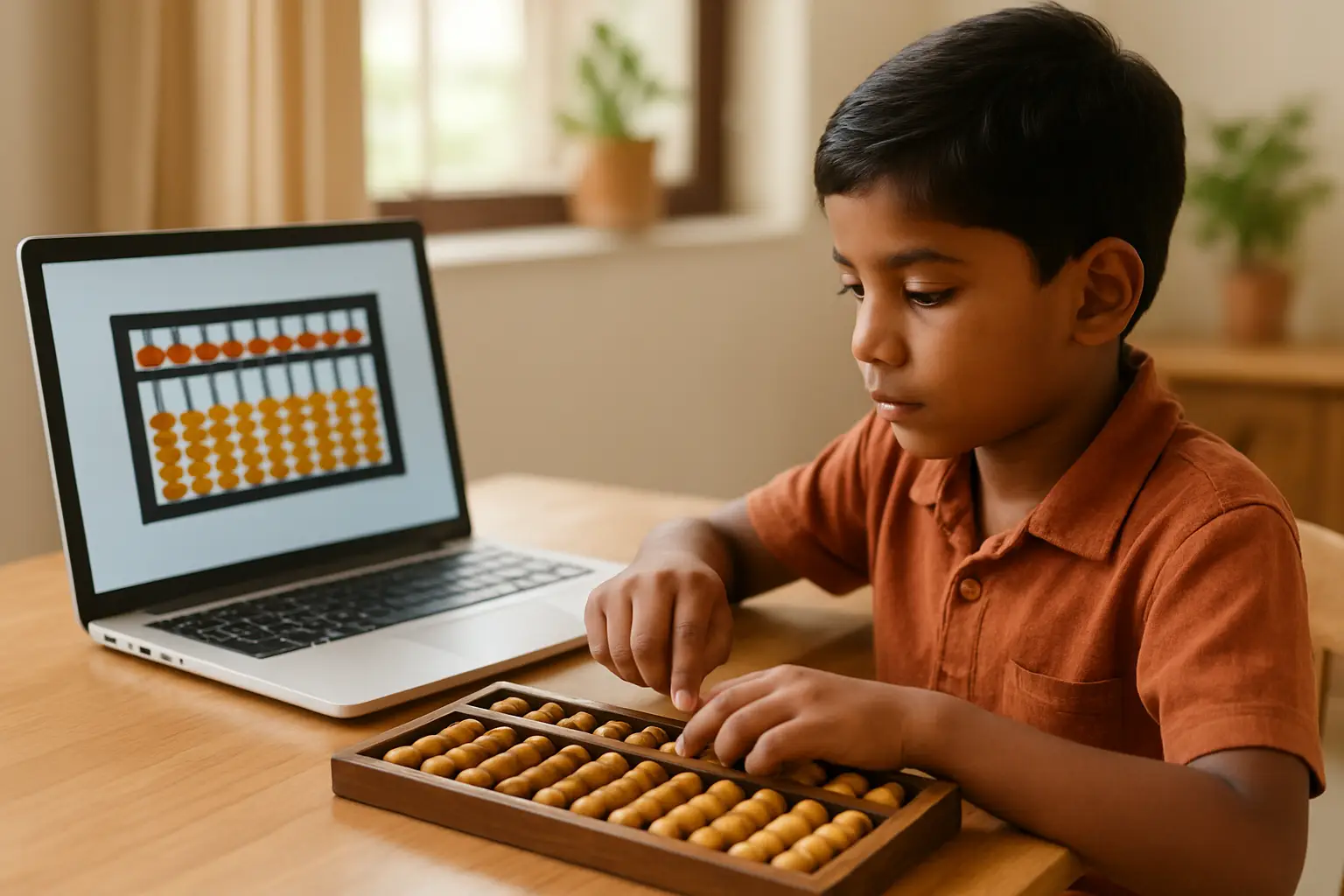
- A digital abacus you can share. Our free online abacus works on screen-share at no cost.
- A class app or Zoom/Meet link that students open from one fixed place
- A way to give and check homework. This decides whether online batches keep students.
- Headphones with a mic for you. Students can use their device speaker.
Why do students drop off online, and how do you stop it?
| Reason | What fixes it |
|---|---|
| Child sits through class but doesn't practise | Daily practice that is auto-checked, with scores parents see |
| Parent can't see progress | Level exams with results and a certificate at each level |
| Teacher can't see the beads | A shared digital abacus where you can open any student's frame |
| Joining is a hassle (lost links) | Classes start from one place: the academy app timetable |
| Feels like "just a video call" | Your own app and brand. It looks like an academy, not a Zoom link. |
Most of these are about visibility: parents and teachers seeing the work. That is the real difference between online batches that grow and ones that shrink.
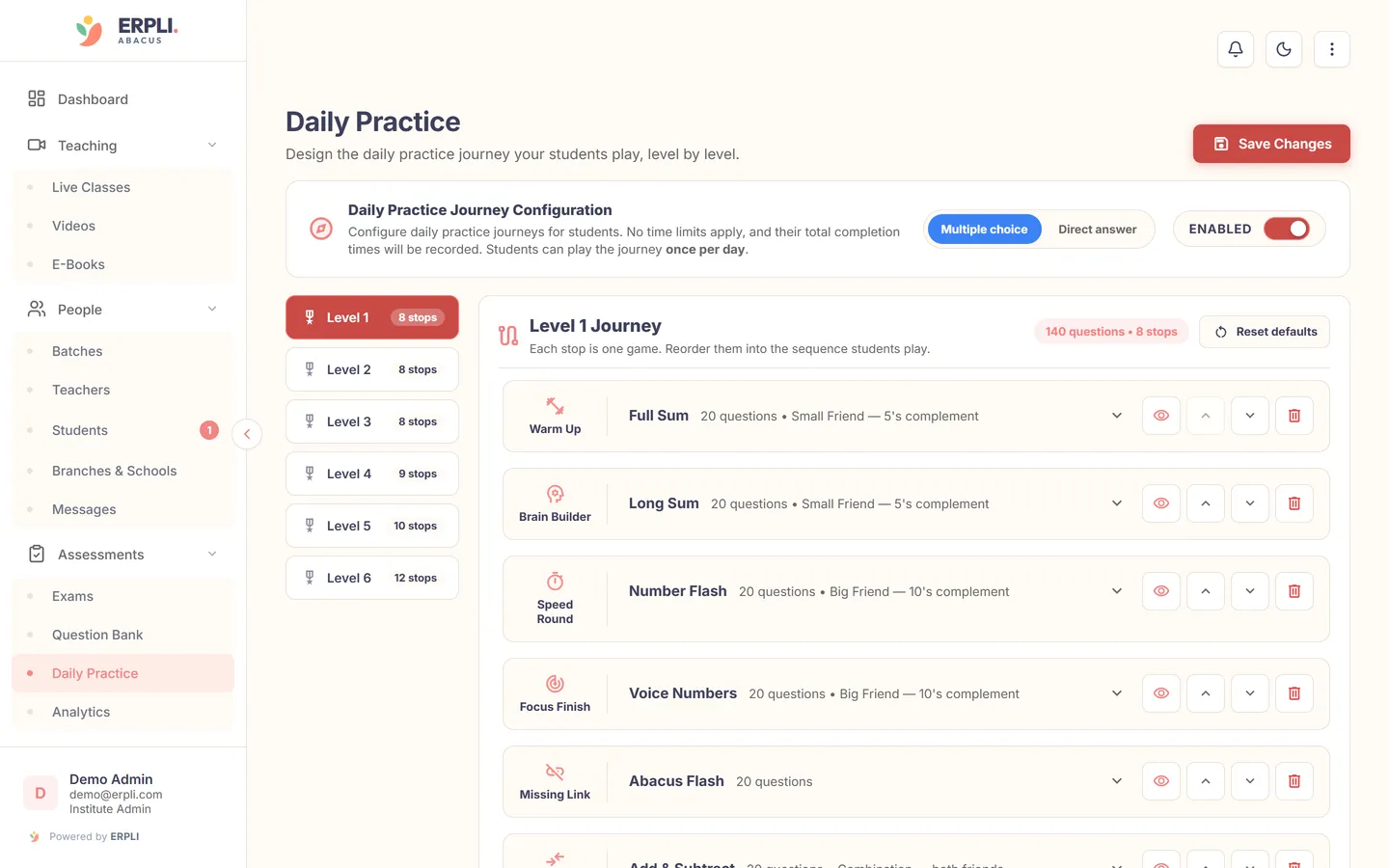
How does ERPLI run an online abacus batch?
- Live classes inside your academy app, or Zoom and Meet connected in one click and started from the timetable
- A live abacus board. Every bead you move shows on students' screens, and you can open any student's frame to correct it.
- Homework on the abacus itself. Students set answers on the beads and ERPLI checks them.
- 22 abacus practice modules from Level 0 to 10, plus Flash Anzan at speeds from 2.0s to 0.2s, opened or locked per batch
- Recorded lessons for students who miss a class
- Level exams and certificates with your logo, plus fees, attendance and parent reports
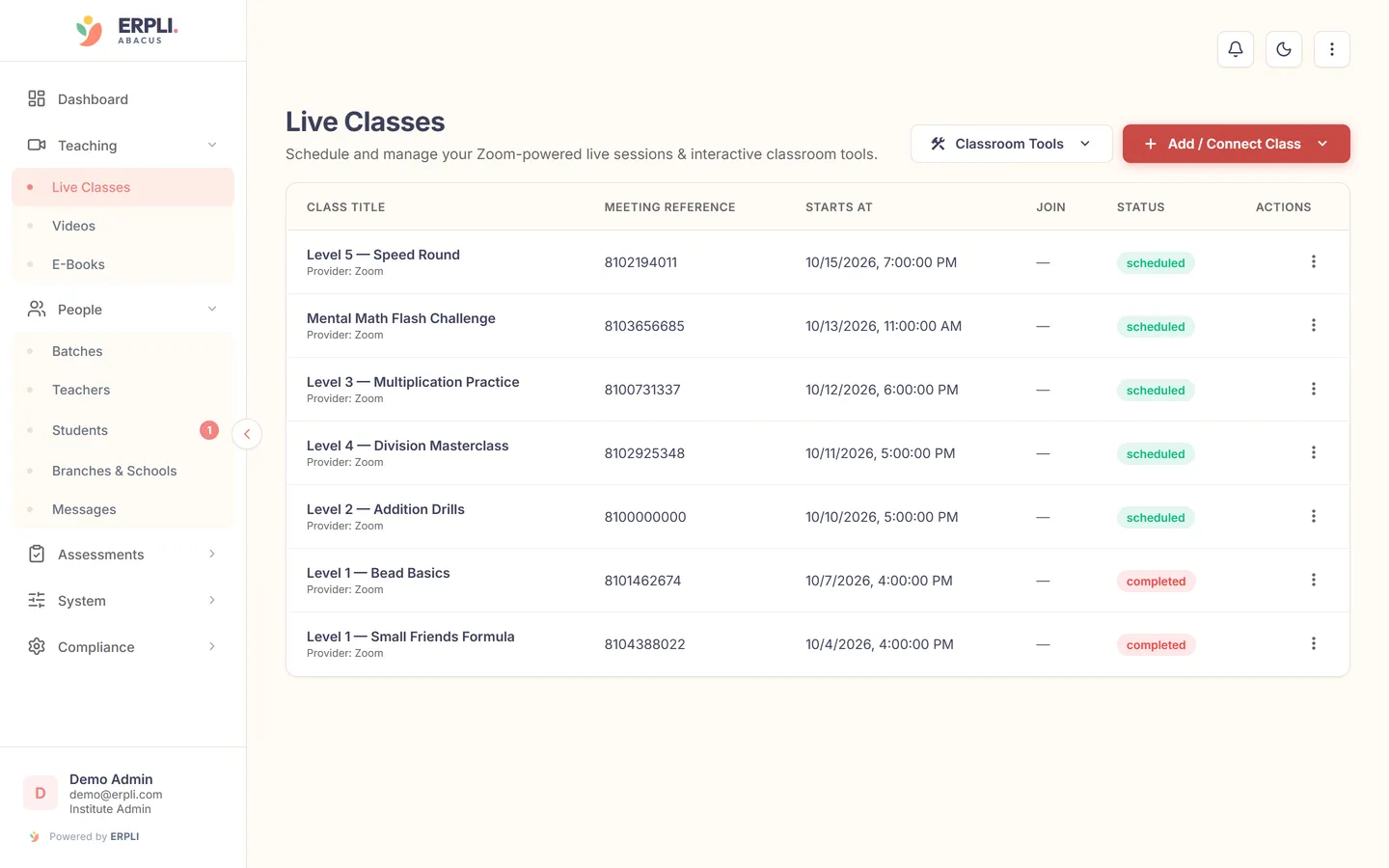
ERPLI Abacus costs ₹50 per student per month for up to 30 students, ₹45 up to 50, ₹40 up to 75 and ₹30 up to 100. There is no setup fee and no royalty. See pricing.
Teaching from home? Our guide to starting abacus classes from home covers the setup.